The following commentary was sent to me by a good friend and smart observer of regional politics. He comments occasionally at QN under the moniker “J of Chalcedon”…
**
Here are five thoughts on the flotilla debacle, its gifts to Tayyip Erdogan, and Turkey’s ambitions for regional and international influence…
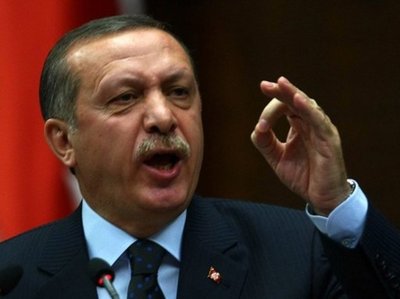
1) It allows him to take credit for something the Israelis will have forced on themselves, if the blockade is lifted, and to play the role of the world’s slumbering conscience if it isn’t. And since the relevant context is outrage over the deaths of Turks, it allows an opportunity to…
2) Tie a knot in the tongue of what is supposed to be a revitalized political opposition. The Israeli raid came hours after an attack that killed six Turkish troops; ordinarily this would have been the moment to lambast the government for a failed Kurdish peace initiative that has stalled and given way to renewed fighting. Instead, they’re cheering the decision to pull the ambassador from Tel Aviv and speculating in wooliest fashion about the timing of the two events. When you reduce the opposition to tracing your steps around the flag and muttering about conspiracy, you effectively have no opposition.
3) Soft power among leaderless Arabs? Make mine a double. Egypt’s decision to open the border, at least temporarily, only highlights embarrassing complicity in the blockade to begin with. And the position of the other Arab powers – silence, or cheerleading while Turkey pounds podiums in the Security Council – is little better. By one account, the ship in question was Istanbul municipal scrap, sold to an Islamist NGO and flagged to the Comoros. That it could be the vessel of Arab diplomatic ambition is the saddest, and most apt, measure of the those states’ ability to make any case other than the one for their disarray.
4) Turkey doesn’t get many chances to be righteously peeved on the big stage. The things that inspire the greatest indignation in the foreign ministry – think Kurds and PKK – tend to look self-inflicted to the rest of the world. How this one plays out will be interesting.
5) … And yet, there may be room for Turkey to transform itself from victim to villain. See Erdoğan’s remarks yesterday on the local implications of the crisis (don’t have English handy, but here’s a quick and dirty translation of an interesting bit):
“Let me say this openly and clearly: I’m not emotional; we’re not emotional. But it’s impossible to describe a humanity that’s bereft of emotion in the face of these events. It’s all a matter of managing emotions, and I believe we’ll do that successfully.
Regarding all our citizens, and particularly our Jewish citizens living in our country, I’d like to say this: they’re our citizens. We’ve never, up to now, gone and taken Israel’s approach toward our own citizens, whatever their religion or ethnicity, and we’re not going to. They’ve been entrusted to us. I want my people to act even more sensitively on this point. I want our people to know that, in the framework of their sensitivities, as a state we are and will be following up on every aspect of this incident. I believe care will be taken to show democratic reactions with dignity and self-possession in a manner befitting our nation. And that’s their most natural right. I respect that.”
As far as I know, no one had suggested that the AKP’s appeal to the bleacher seats of Muslim sensibility over the boat crisis would translate into a backlash against Turkish Jews. And it’s not clear how reassuring they – given Erdogan’s remarks about Jews being guests (i.e., foreigners) in Turkey at the time of Israel’s destruction of Gaza and the Davos tussle – are supposed to find this guarantee.
It does point out, though, the way that the AKP flirts – self-consciously – with the uglier strands of domestic sentiment while pressing its case for a broader Turkish international role. It’s hardly a new tack in national politics, and their handling of the US-brokered bid to bury the Armenian genocide question by normalizing relations with Armenia is exactly what any other Turkish government would have done. What remains to be seen is how they’ll balance that set of impulses with the rare opportunity to advance the flag on an international issue, from the unmapped territory of the moral high ground.


If you believe in the saying that “demography is destiny” then you have to conclude that Turkey is still learning how to exercise its newly found political and economic muscle.
In a world where the developed countries would at best maintain their population but age at a rapid rates coupled with very slim economic prospects for growth and a group of poor countries overwhelmed by a rapid population growth there is a group of countries that has the knowledge, infrastructure, political stability and economic strength to grow at a modst rate and to act as the cohesive glue that can help the global community maintain balance and stability. Most prognosticators believe that besides China, India and Brazil Turkey and Iran will play a major role in the coming decades. So get used to it. Turkey is here to stay and having it on your side is going to become more and more important in the future.
Allow me to share with you what Sarkozy spoke about at Columbia University in NYC a couple of months ago. He said that we need to reconfigure the group of 8 and the group of 20 not to be nice but because we have to. If we don’t invite them in at the moment then they will not invite us to share their power in the future. And he is absolutely right.
Posted by Ghassan Karam | June 1, 2010, 2:46 pmTurkey’s 9-11
What BS. Turkish “peace activists” die because they started beating up armed IDF soldiers who are legally imposing a blockade.
Funny, the 3000 who died in 9-11 weren’t trying to bust a blockade.
And Turkey can’t even admit to occupying a foreign country (Cyprus) or committing her own little genocide of 1.5 million Armenians.
http://www.ynetnews.com/articles/0,7340,L-3897683,00.html
Posted by Akbar Palace | June 1, 2010, 3:22 pmAkbar,
“legally imposing a blockade”?
Sorry. But the ships were boarded in international waters. End of story. No argument to be made whatsoever there. There was absolutely NOTHING legal about that. What happened after may be open to debate, but the legality of accosting a ship in international waters is beyond discussion and no different than what happens off the coast of Somalia. By ANY legal standards, it is PIRACY.
I’m speaking strictly from a legal standpoint here. The moral equivalency to the Armenian genocide is completely irrelevant here (and I say this as a descendant of Armenians who fled said genocide).
And if you wanna bandy around terrorism, I have to wonder if you’d say the exact same thing had an Israeli supply ship been boarded in international waters by armed islamic terrorists (or for that matter, anyone rememeber the Achille Lauro?).
Had the crew and passengers of said Israeli ship beat the terrorists with crowbars, would that have justified said terrorists opening fire on the passengers? By your logic, it would have. Right?
Posted by Bad Vilbel | June 1, 2010, 4:41 pmThanks GK but some how the 8 doesn’t want to share so the rest you might as well pass us by, we just aren’t bright enough at this time.
BV thanks for pointing that out but it won’t help A, just another closed mind in the sea of thought and reason.
Posted by jo6pac | June 1, 2010, 4:47 pmIt is clear that you’re the BS as well as your SOB IDF cowards. What does 911 have to do here?
——————-
Reagrding the five thoughts:
1. What does it mean: “…take credit for something the Israelis will have forced on themselves”. This is the same twisted logic of the colonial setller state (that will be dismantled one day despite all the money puring from the West and the White man in Washington, Barack Obama, weaponry) that those who were killed by cowardly Zionist Jews armed by cowardly Zionist Christians are to be blamed and for those who supported them, including the officials and local organisations in Turkey! On the other hand didn’t the criminal settler state plan and execute the attack?
2. Which “revitalized political opposition” in Turkey? Those criminal elements in the army and the pro-American and Zionist circles who were caught on the spot making plans to return to old-age dictatorship.
3. “By one account, the ship in question was Istanbul municipal scrap, sold to an Islamist NGO and flagged to the Comoros.” So what? The ship has sailed safely. No connection with the dictators in the Arab world who are and their children pro-Zionists.
4. “The things that inspire the greatest indignation in the foreign ministry – think Kurds and PKK – tend to look self-inflicted to the rest of the world.” Self-inflicted? Is Fouad Ajami still alive?! And what rest of the world? Western media and Western governments? No one can deny that this current government has made many commendable gestures to fix many issues internally and externally. Regarding the Armenian genocide, how come no one talk about the responsibility of the hypocrites (and later on Nazi-collaborators in France) in Paris and in London for the debacle after the so-called World War I. Didn’t they want to see what’s left of the Ottoman empire dismembered including “modern Turkey.” The French can slaughter and rape millions of Algerians, bomb and dismember Syria and facilitate along with the British the dispersement of the Palestinian people and the settlement of the most racist creed that still breeds in the West, i.e. the Zionists. And yet, all this is effaced as if nothing. The hypcrites in the West celebrate Ataturk when the issue of marginalizing Islam in Turkey comes out and they vilify modern Turks when they don’t follow Western Zionist discourse.
5. The statement made by the Turkish Prime Minister is the right one due to all the propaganda being circulated shamelessly in Western media. Even in Canada the CBC scooped so low in its coverage and insinuations.
Posted by Jihad | June 1, 2010, 4:53 pmI agree with the analysis except I just learned that if there is a blockade imposed over an area; the country (israel in this case) has the right to board the approaching ships in international waters. Any breach would account to an act of war.
As for Mr. Erdogan and his islamist Party and the hints about Jews being guests…He threatened to “deport” 100,000 Armenians that make a home in Turkey a few months back if the Armenia had not agreed to Turkey’s terms regarding the protocol that was signed between them regarding normalization of relations and opening of borders!
Turkey is posturing as alaways to deflect their treatment of Kurds as second class citizens. As for their blatant refusal to come to terms with the Armenian Genocide; it is well documented!
Israel and Turkey are still strategic partners as far as the Generals of turkish armed forces are concerned.
I would say all this posturing is to leverage against USA and not Israel to achieve their goals. Denying the genocide of the Armenians and covering up the Kurdish “problem”…
Posted by danny | June 1, 2010, 5:23 pmAs usual, all the problems in the middle east are Europe’s fault. They should have accepted the Turks into the EU. Now Erdogan is trying to become the “beating heart of the Arab resistance” and he is not even an Arab. It will be interesting to see how Assad accepts sharing the limelight with Erdogan.
Posted by AIG | June 1, 2010, 5:44 pmHersh: US, Israel support PKK
http://www.presstv.ir/detail.aspx?id=28988§ionid=3510203
Posted by Jihad | June 1, 2010, 6:41 pmI don’t understand why Israel would have anything to gain by supporting the PKK, to be honest.
Conspiracy theories are well and good when they at least have some kind of logic behind them. This one doesn’t hold water, if you ask me.
(And Hersh’s credibility is pretty suspect these days. Being quoted by the Iranian media hardly gives this story a lot of meaning).
Posted by Bad Vilbel | June 1, 2010, 7:16 pmSorry. But the ships were boarded in international waters. End of story. No argument to be made whatsoever there.
danny,
Thank you for correcting Bad Vilbel. Israel’s response to breaking the bloackade and the “peace activists” was perfectly legal.
I look forward to the investigation.
Posted by Akbar Palace | June 1, 2010, 8:08 pmAkbar Palace,
It all depends on who you ask? The UN, Human Rights Watch and many ngos and other organizations say outright that a blockade is an act of war, it is illegal, it is a war crime etc… But I am sure that some will always stretch a definition in order to ascertain legality. If that is what you mean by legal then you are more than welcome to it. It will then be legal but morally reprehensible.
To argue that starving a population, using military force to transform a whole sregion into effectively a prison, to claim that Gaza is not anylonger occupied and therefore Israel is not to be held accountable by the Fourth Geneva Conventions is a crock and you know it.
Why must you have a knee jerk reaction in defending all Israeli actions? The silly idea of my country right or wrong is balderdash and frankly I would have expected a different kind of reaction from many of the Israeli commentators. So many of the Arab commentators ,on this blog as well as others, have often criticised strongly Arab actions and Palestinian strategies and I would have hoped that at least in a case that is essentially an illegal blockade ( There ought not be a legal blockade of food since this is in contravention of UDHR’s article 24).that you would have been able to critique the actions undertaken by the Israeli government in this case which clearly is , if nothing else but a cause of concern on both legal and moral grounds. If you cannot see that Israel has overreached in imposing this blockade then I am afraid there is absolutely nothing that we can ever agree upon. If that is true and I sure hope that it is not then the Palestinian Israeli question stands absolutely no chance whatsoever for finding an honourable solution.
Posted by ghassan karam | June 1, 2010, 10:09 pmTesting ( I am sorry for any inconvenience that this post might cause).
Posted by ghassan karam | June 1, 2010, 11:04 pmThis is an excellent analysis by Sateh Noureddine of Assafir. I translated it quickly using Google while also making quick adjustments:
“Israel and the Front of Anatolia,”
Assafir, Issue 11605, Wednesday, June 2, 2010
“In a premeditated design, Israel has deliberately targeted Turkey and its new role in the Arab and in a brutal way more that makes it difficult to predict Ankara’s, and whether it will decide to retreat and withdraw its political fleets deployed in the Eastern Mediterranean or whether it will go ahead in the confrontation with the Israelis until forcing them to recognize its vital Arab interests which do not derive their legitimacy from the transformation of Palestine into a Turkish case, mostly humanitarian, but also of the political coverage provided by the Turks to Syria and Lebanon ..
There is reason to believe that Israel had targeted Turkey ins this ugly way only because it wants to respond to the Turkish mediation developed in the Iranian nuclear file and which, prior to the attack on the freedom fleet destined to the Gaza Strip, is approaching the moment of truth and it awaits for a final American answer to the Iranian-Turkish-Brazilian triangular Tehran Agreement related to the exchange of uranium. The answer can be delayed somewhat and it might never reach Ankara and from there to Tehran in order to return things back to point zero that sits close to the edge of war… which the Israelis want and insist upon.
It is no exaggeration to say that what happened in the waters of the Mediterranean was a sign that Israel, which objected since the first moment to the Tehran agreement and considered it an Iranian ploy aimed at winning time, decided to send a warning to Turkey that it crossed the red lines through its mediation with Iran, and forced the Turkish Foreign Minister Ahmed Dawood Ihsanoglu to go to the UN Security Council in New York to follow up the Israeli massacre against the passengers of the Turkish aid fleet to Gaza, rather than to fly directly to Washington to hear the position of President Barack Obama about the Tehran Agreement.
There are more than an indication that Ankara has received clearly the American response to the mediation with Iran when it read the reaction of the Obama Administration on the massacre in the Mediterranean which, since its first moment, covered fully the Israeli attack on the relief ships and justified the fall of the dead and wounded and prevented any condemnation or an international trial of the perpetrators. There is more than one estimate that Turkish diplomacy will have to step back within the limits set by the Americans, this time through the Israeli navy, which has implemented directives, or at least American wishes to put an end to the unexpected widespread proliferation of Turkish influence on the region!
Regardless of the campaign of condemnation sparked by the Mediterranean massacre in the circles of the Arab and Western public opinion, which can be forgotten in a few days, Israel will not risk its reputation and its role, but probably it had begun its military campaign and political countermeasures, which gets its army beyond the defense of the internal front, in order to make the case for an attack on the Turkish front that targets also Iran, Syria and Lebanon by sending a message to the three countries that war is no longer a difficult or postponed option after completing just involving all fronts .. Including Anatolia’s Front.”
Posted by Jihad | June 1, 2010, 11:05 pmAkbar Palace,
I sent a response to your last post but it just seems to have disappeared in thin air. So here is another but a shorter version.
The issue of whether the act of piracy by the state of Israel is strictly legal or not is not an important issue. One can always find lawyers who are willing to stretch a particular interpretation of an existing law as to justify practically anything. What is most important is the court of public opinion in addition to the common sense interpretation of a particular action.
Blockades, especially those that are carried against a whole region and that include food and other essential commodities are violations of human rights to say the least. Actually a blockade similar to the one imposed on 1.5 million people is aginst section 24 of the UDHR. The UN has called it an act of war, the Secretary General , Human Rights Watch and many other international Organizations have also joined in condemning the blockade.
Further more it is absurd to use the argument that Israel is not an occupier and thus has no responsibilities under the Geneva Convention. (If it looks like a duck and squacks like a duck then it is a duck).
To be very frank I am dissapointed to find out that the few Israeli commentators on this blog seem to subscribe to the silly idea that My Country right or Wt
rong. Such knee jerk reactions to justify what is clearly an Israeli overreach, not only in boarding the flotilla but in justifying a blockade of food only because the acts were undertaken by your government are very much a disappointment. I expected a more bbalanced and a more honest reaction. Many Arab commentators , on this blog and elsewhere, have often critiqued the Arab acts and the Palestinian strategies in a much more even handed way. To take the position that Zionism is always right even when Jewish intellectuals are openly questioning whther Zionism can be moral when it is used to justify immoral acts is distressing. If your reaction is typical, and unfortunately it appears to be, then it does not bode well for the issue of a final,fair , and comprehensive resolution to the Palestinian Israeli question. If you cannot get yourself to see that blockades that aim to inflict collective punishment on a whole people and that such acts are clearly immoral then there isn’t much that we can talk about is there?
Posted by ghassan karam | June 1, 2010, 11:55 pmIt is too bad that the recommended analysis is quite simplistic–and pedetsrian–reeking of the realpolitik slant. I certainly hope that your own training, QN, is not as simplistic. Studying possible consequences and passing them on as interests or motives is such an old game… When will Middle East scholars transcend geopolitical philistinism and really start analyzing actual forces, effects, and contexts in their complexity!!
Posted by Parrhesia | June 2, 2010, 2:49 amGaza comme le sud du Liban, une vraie tête de Turc
Posted by Abdo | June 2, 2010, 3:30 amTo take the position that Zionism is always right even when Jewish intellectuals are openly questioning whther Zionism can be moral when it is used to justify immoral acts is distressing.
ghassan karam,
The Arabs can’t have it boths ways habibi.
Is Gaza at war with Israel? Does Gaza lob missiles and mortars into Israeli population centers? If so, the blockade is legal. If not, the blockade is not legal.
The arabs want to fight Israel, cause an Israeli response, and then cry to the international community. And the only reason why the int’l community listens to these claims is due to their own respective dealings with arab terrorism.
The most pro-Arab forces in the US are the far-right polemics who are so afraid of arab terrorism, that they’re ready to throw Israel to the wolves.
Hence, we have the strategy for the Middle East. Terrorize the world enough to make Israel the weak link.
In conclusion, it isn’t about “rights”, legal cases, and international law. If it were, Israel would win almost every time. It is about sheer Arab thuggery.
Posted by Akbar Palace | June 2, 2010, 7:01 amA tad surprised at your comment vis-a-vis Truks’ possible retaliation against local Jews. Surely Erdogan had received national intelligence prompting him to voice his subtle concern. Not to mention the quota Turkish police imposed on demonstrators allowed to approach the Israeli consulate in Istanbul.
Posted by Noble Christian | June 2, 2010, 7:59 amAkbar Palace,
Your response did not surprise me. I wanted it to be more thoughtful and more self critical but I also knew that I was being delusional
What we try to pass for dialogue is at times nothing but an exercise in rehashing old worn out positions. A dialogue requires an open mind and the ability to be fair and objective. Don’t tell me that you are objective when you always conclude that anything and everything done by any Israeli government is right. How can that be? Many US commentators, as well as British, German, Russian etc… are strong critics at times of policies adopted by their governments. To oppose a government policy is not unpatriotic.
Your weak argument in this case is a reminder of the proud mother watching her son march in a large military parade. She exclaims to all who can hear: Look at how is it that everyone is out of step except my George.
Well Israeli policy in this case is equivalent to George and if you cannot see it and you want to accuse the whole world of thugery then be my guest.
Posted by Ghassan Karam | June 2, 2010, 8:29 amGhassan karam,
I think the reason you and AP are talking past each other is the following. I, just like AP, do not get why Israel is responsible for the Palestinians in Gaza or why we owe them anything. It is clear to me that Hamas is the one responsible. They have money from Iran and the tunnels are working perfectly well, so let them buy the things Israel does not let in. If cars can be smuggled through these tunnels, than also cement can be. If Hamas decides that buying cement for the Palestinians is not its priority, it is not Israel’s problem.
To AP and me your position sounds a little like deflection. The Arabs should solve their own problems, not deflect them by blaming Israel. I know that you criticize your own side frequently and vehemently, so our argument it seems is about who is responsible for the situation in Gaza.
Posted by AIG | June 2, 2010, 9:44 amGhassan Karam,
Ok. Let’s be “thoughtful”. How is Israel’s blockade illegal? What makes a blockade legal?
Posted by Akbar Palace | June 2, 2010, 9:55 amGuys don’t you think you have veered off way into the left field from the topic of the post?
Just curious.
Posted by danny | June 2, 2010, 10:28 amFrom San Remo that the Mafiasraelis are so fond of quoting:
102. The declaration or establishment of a blockade is prohibited if:
(a) it has the sole purpose of starving the civilian population or denying it other objects essential for its survival; or
(b) the damage to the civilian population is, or may be expected to be, excessive in relation to the concrete and direct military advantage anticipated from the blockade
Posted by mo | June 2, 2010, 10:39 am“do not get why Israel is responsible for the Palestinians in Gaza”
Israel bears legal responsibility for the consequences of its actions and omissions concerning residents of the Gaza Strip. This responsibility is unrelated to the question of whether Israel continues to be the occupier. It is entirely predicated on the net influence one nation has on anothers in allowing it to behave and act as a sovreign state. Therefore, under international huminatarian law, the fact that Israel constricts the ability of Gazans to enter and exit Gaza by sea and land the more responsible it is for any humanitarioan hardship in Gaza.
Do you get it now? If you want to wash your hands of Gaza, close your borders and leave the rest of it alone.
Posted by mo | June 2, 2010, 10:45 amGhassan, I wouldn’t bother asking about the morality/legality aspects of this story with the Israeli barbarians bc AP has clearly shown us what the Israelis think. Remember it’s not a crime if those murdered are a bunch of Muslims. Please try to remember that 9/11 and the Hollowcaust will outweigh any wrong done by Israelis for eternity. I think if you agree to this premise you will have much more fruitful discussions with AP.
I think the real issue to be discussed with the Israeli commentators is how a group of highly-trained Israeli commandos, possibly the most elite in the IDF, got their asses handed to them by a bunch of civilians on a boat? Poor little IDF commando. He tried to storm a ship in international waters and got hit with a stick…
To AP, AIG and the rest of the Israeli commentators: How does it make you feel to see the IDF get beat up by a bunch of activists? Is it acceptable that activists without any apparent military training can take an IDF commandos weapon from him?
What will the IDF do in the next real battle against, Hizb, Iran, Palestine, Syria, hell it now looks like Turkey (NATO) is added to this list.
Posted by Johnny | June 2, 2010, 10:55 amGaza is at war with Israel. We owe them nothing and are responsible for nothing there.
Is “international humanitarian law” the law that allows the Lebanese to keep the Palestinians in camps and deny them basic rights? Or is it the law that allows Asad and Mubarak to rule as dictators? Or perhaps that is the law that allows Hamas to throw people of buildings?
Mo, don’t make a joke of yourself by citing some laws that not one Arab entity follows or respects.
Posted by AIG | June 2, 2010, 11:00 amAIG/AP
This was never meant to be a purely legal argument. But since you ask let me repeat myself since you have not read what I wrote earlier closely: Human Rights Watch claims that the blockade is illegal, a number of UN organs claim that it is illegal, Ban Key Moon claims that it is illegal, The Geneva convention makes Israel responsible for the welfare of the 1.5 million people of Gaza although Israel says that the occupation is over. But if it is over then why block deliveries of food. That is in contravention of article 24 of the UDHR. and there are many scholars who believe that a blockade is an act of war. If Israel is concerned about war materiel then that is not stopped through a total blockade but through an embargo.
And let me go one more time to another issue that I raised with AP earlier and he has not answered: Is it ever possible for the government of Israel to adopt a wrong policy or is anything adopted by the Israeli government is above reproach. To me this is a hugely important issue. If we are to get anywhere then we must have the courage to judge events and developments on their merits. And yes, as well as you know, I have taken many positions in opposition to Arab, Palestinian, and Lebanese acts.
Posted by Ghassan Karam | June 2, 2010, 11:08 amJohnny,
Have you actually been in any armed service?
I don’t think so.
If 10 “activists” attack one commando who cannot shot live ammo at them, of course they will beat him.
As for the next real battle, let’s wait and see. Israel has conducted drills, revamped shelters, learned its lessons. How have the Lebanese prepared? Do you have any shelters? What weapons has your army acquired or developed since 2006? Israel is the fourth largest exporter of arms in the world.
The Arabs are going to lose all their wars with Israel because they are divided societies with no accountability that are also technologically backward. Few Syrians are willing to die in order to maintain Asad and his lackey’s life style.
Look at yourself and fix your own societies. But of course you will blame the West and/or Israel instead of fixing your own house. Let’s see ONE liberal democracy in the Arab world. You guys talk a great talk, but there is not even one government in the Arab world that is even close to a liberal democracy. So what exactly are you guys talking about? If you can’t fix your own societies, why do you complain about Israel? Leave that to the Israelis.
Posted by AIG | June 2, 2010, 11:19 am“don’t make a joke of yourself by citing some laws that not one Arab entity follows or respects”
LOL….you want to deflect the argument go ahead. You asked a question I answered it. You don’t like it, don’t behave like a 5 year old and scream “but they did it first”. You don’t like the law say so. We are all very used to Israelis regard to int. law (except of course when claiming they have a right to the land because the mandatory fathers bequeathed it to them…).
Oh and you are not “at war” with Gaza since you do not recognise Gaza as a state and therefore you are still responsible for it as an occupier. You are occupying Gaza and are fighting a resistance movement. And therfore you are responsible for everything. Don’t want the responsibility? Simple, stop occupying it. Simply withdrawing your troops and blockading the entire population does not an end of occupation make.
Oh and by the way, the examples you state may be wrong or criminal but they are not breaking any internstional law.
Posted by mo | June 2, 2010, 11:23 amGhassan Karam,
Of course it is true that Israeli government do many stupid things. That is why Israelis often change their governments, unlike Arabs who seem to like monarchs and feudal war lords.
In this case, Israel should have been able to stop the ship without killing anyone like it stopped the other 5 ships in the flotilla. Israel will figure out what went wrong. But it was not the act of attempting to stop the ships that was wrong. If they had gone through, this would have become a way for Iran to arm Hamas with whatever they want. We have seen how well the Lebanese have stopped Iran from arming Hezballah. Excuse us for wanting to make sure that they have a little harder time with Hamas.
Posted by AIG | June 2, 2010, 11:24 amMo,
Again you are making a joke of yourself. At the basis of international law is the declaration of human rights that no Arab country even comes near to following. Yet you keep trumpeting international law. You want Israel to take international law seriously? Start respecting it yourself. Otherwise, it is just another cynical weapon to fight Israel.
Israel is not occupying Gaza. Israel has every right to make sure Gaza does not become another forward base for Iran like Lebanon has become. If the Egyptians want to open their side of the border, they should do that.
Posted by AIG | June 2, 2010, 11:28 amLOL, If only your football team was as good at deflecting everything thrown at it, you’d have won the world cup by now.
Posted by mo | June 2, 2010, 11:41 amAIG,
Let me first apologize from our host for making this exchange sound as if it is tit for tat.
Ibelieve mo has already mentioned what I was going to say. Back to your statements about Arabs not giving Palestinians their rights. I and many others have been very highly critical of that but what is relevant to this case is the simple answer that two wrongs do not a right make. So Arabs are authoritarian, inefficient, discriminators etc… does this then justify your becoming as bad as they are. You know that this is not a defense for doing the wrong thing.
Again I am afraid that we are not talking to each other. The objection is not to a blockade of arms as much as it is the blockade of food and basic necessities in addition to the intent of starving a whole people just to make a political statement. Communal punishment is wrong and has no place in civilized society.
BTW, I do appreciate the fact that you acknowledged though in a back handed way that governments , even Zionist ones, do adopt wrong policies. Allow me to add though that a policy might be judged to be wrong but yet the government could still win the elections and again the fact that Arab regimes are not democratic has absolutely no bearing on the merits of the issue at hand.
If you are interested in finding out what some of us think about the inhumane treatment of the Palestinian Refugees in Arab countries then you can checj out the latest in a number of articles on this issue that I happened to post early today on Yalibnan.com and my personal aggregator rationalrepublic.blogspot.com
Posted by Ghassan Karam | June 2, 2010, 12:19 pmAIG says: ‘If 10 “activists” attack one commando who cannot shot live ammo at them, of course they will beat him.’
I think the video feeds coming out now with the Commandos throwing Stun grenades as they descend the ropes, Not to mention the use of live ammo resolve the need to refute this blatant lie. ‘Who cannot shoot live ammo’ Are you serious dude? How did all those bullets end up in those people’s bodies? Is that a new Israeli invention, the self-shooting gun?
I’m not gonna argue with you about Arab societies cause you are largely right. I would argue that Lebanon is a democracy and its society largely liberal. It is not perfect and needs a lot of work but it is better than any other country in the region – including yours.
Finally, I couldn’t care less what Israeli society does with itself. What you do to your fellow citizens is of no concern to me. But when it comes to infringing on MY human and resource rights you better believe I will call you out on it.
As a Lebanese I tell you: Until you stop violating MY airspace, until you stop stealing MY water, until you stop kidnapping MY shepherds there there is NO appeasement!
As a Palestinian I tell you: until you return MY father’s land in Haifa then there is no appeasement!
Posted by Johnny | June 2, 2010, 12:20 pmLet me add this to my last post.
As a Lebanese or Palestinian I say ahla wa sahla to MY law abiding Jewish neighbors in either Beirut or Haifa.
Posted by Johnny | June 2, 2010, 12:27 pm@ AIG (Post #20)
You say “How is Israel responsible for the palestinians in Gaza”.
Simple. If you want nothing to do with them, why are you blocking their sea access?
You can’t have it both ways. Either you are blockading Gaza (in which case you DO have something to do with Gaza), or you leave it be entirely, which includes leaving Gaza’s access to the Mediterranean alone as well.
There is a clear contradiction in that statement of yours.
Posted by Bad Vilbel | June 2, 2010, 12:39 pmGhassan Karam,
Of course two wrongs do not make a right. What makes a wrong is a bunch of hypocrites that keep talking a good “liberal” talk when in fact it is May 8 like instances that determine how Lebanon is governed.
Do you think we are idiots? When the Arabs win, it is the whole Arab world against Israel. When they lose, they complain that Israel attacks them. After the next war people like Johnny will complain that we attacked all of Lebanon when in fact it was “only” Hezbollah that attacked you. They will forget how almost all Lebanese parties supported the “resistance”.
The Gazans elected Hamas and support him. The Lebanese via Hezbollah have changed warfare into one which targets civilians. This is a game you invented, so chin up and suffer the consequences. I and most Israelis will not be suckers and play the game where you can shoot a rocket anywhere you want but we have to care about anything civilian in any Arab territory at the expense of our soldier’s and civilian lives.
My tendencies are very liberal but darn it if my liberal tendencies are going to cost the lives of Israelis. If you care so much about the Palestinians go talk to the Egyptians.
Posted by AIG | June 2, 2010, 12:48 pm@AIG post #26:
You bring up a very good point about the way Palestinians are treated in Lebanon. Both myself and Ghassan have been on record being critical of our Lebanese government for their treatment of Palestinians.
I second Ghassan’s view from earlier that it is disappointing that the “arabs” in this discussion seem to be more willing to criticize their government than the Israelis are of theirs. Self-criticism is key in any real resolution.
As to the legality discussion that continues on in this thread. Let me simply point out what I thought to be pretty freaking obvious (except apparently, the hypocrisy and self-delusion runs high around here):
– You claim you’re at war with Gaza and owe them nothing, and that the blockade is perfectly legal and moral. I’m fairly sure the Nazis said the same of the Warsaw and Krakow ghettos. After all the Jews were officially “enemies” of the Nazi Reich (at least in Hitler’s words and mind) and he treated them as such. So I suppose, by your logic, the holocaust that ensued was perfectly legal and morally justifiable? Really? Maybe you should go make that point in public and see how your countrymen like it? Maybe you should return the compensation that the holocaust survivors received from Germany. Since, after all, it was all legal and moral, so there is nothing to compensate for, right? Let me guess, you have no intention of ever compensating the Palestinians of Gaza, do you?
It’s one thing to debate things with merit, try find a solution to the conflict that’s made everyone’s life miserable in that region. But when we’re simply, as Ghassan pointed out, being hypocrites who refuse to admit any wrongdoing (and this goes for either side, mind you), there really is no point in any of it, is there. We might as well have the Iranians and Israelis lob a few nukes at each other and sterilize the entire middle east. Maybe in a million years, a new generation of non-jewish, non-muslim, non-arab, nuclear mutants will emerge there that will have a bit more common sense than we do.
Posted by Bad Vilbel | June 2, 2010, 12:48 pmBV,
We are blockading Gaza because we are at war with them. If we do not blockade them, they will just get as much Iranian weapons as Hezbollah did. I really do not understand how you can even ask this question after the great job Lebanon did in making sure Hezbollah does not receive weapons.
Posted by AIG | June 2, 2010, 12:49 pmBV,
Please point me to the analogous Jewish charter to the Hamas charter that proclaimed the Jewish aim of annihilating Germany. Israel left Gaza. Hamas took over Gaza. Gaza has a border with another Arab country, Egypt. Hamas for years kept shooting rockets at Israel from Gaza.
In WWII Germany and Japan were beaten because the Allies targeted civilian populations. I do not favor that but damn it if I understand why it is my responsibility to make sure that Gazans have a job or all the kinds of borgol they like. Let the Arabs take care of them. The Lebanese do not think they should offer decent jobs or an education to the third generation Palestinians born in Lebanon but I have to care about the Palestinians under the Hamas rule in Gaza? An organization that targets Israeli civilians and wants to annihilate Israel?
Posted by AIG | June 2, 2010, 12:59 pmAs for the solution to Gaza it is simple. Create a flotilla carrying one thousand liberal Arabs and go to Gaza and have a sit in in front the Hamas headquarters until they accept a liberal constitution.
Posted by AIG | June 2, 2010, 1:01 pmAIG,
I answered a simple question you asked. That’s all. I understand the blockade for weapons. I don’t think the blockade for foods and medicines is legal. That’s already been debated to death above, so I won’t rehash that.
You asked why you should be responsible for Gaza. I answered. The Geneva convention and other international laws (including the ones that offered Jews reparations from Nazi Germany) are clear that if you do decide to blockade a population, you are responsible for its well being. What part of that is hard to understand?
If you are blockading Gaza (you just said you were, correct?) then you are obligated to ensure food and medicines, and you are indeed responsible for the population you hold hostage.
And don’t get me started on May 8, Hezbollah and all that. I have been bitching till I was blue in the face about HA, its weapons, and the destruction it’s brought to my country. I don’t think I have made a single post in the past 5 years or so where I didn’t argue that HA is a cancer that should be removed. I blamed HA for the 2006 war, not Israel, because HA provoked it. I argued after, that Nassrallah’s “divine victory” was no victory at all. That he should be tried as a traitor to his country and hanged for taking orders from foreigners, for causing the death of his compatriots and so on. I called for him to be tried again in 2008, when him and his cronies proved once and for all that they did not work for Lebanon or respected the state institutions of Lebanon.
But as we keep repeating, 2 wrongs don’t make a right. Just because I am critical of Israel’s actions in Gaza does not mean I have any love for HA. Nor does it mean I want Jews driven into the sea, nor does it mean I support the Iranian mullahs, nor does it mean I think it was morally an legally acceptable to blockade an entire jewish population in Warsaw and starve it to death.
See how that works? It’s called having principles. I am against starving people to death, no matter if they’re jews, muslims, or whatever.
I am also against illegal militias, even in my own country.
So please stop using this silly argument that your “wrong” is somehow made acceptable because the arab countries are “worse”. Yes. We ARE worse in many ways. We are divided, tribal, ruled by feudal dynasties with close to no democratic values, and worst of all, we have no sense of nationality or patriotism. NONE OF THAT GIVES YOU A FREE PASS TO DO WRONG.
Posted by Bad Vilbel | June 2, 2010, 1:06 pmBV,
Israel is not stopping any medicine from going into Gaza. Why are you saying that?
There is enough food in Gaza. Gazans are not starving to death. In fact, the standard of living in Gaza is higher than in most African countries. Why do you claim Gazans are starving?
If indeed Israel would be doing what you claim, I would not support that either. But we are not starving the Gazans. That is just false.
Posted by AIG | June 2, 2010, 1:31 pmAIG quote: “Israel is not stopping any medicine from going into Gaza.”
Remind me again, what was on board those ships that got boarded 2 days ago? Food and medicine.
Fact: Israel did stop those ships (which carried food and medicine).
Both Egypt and Israel HAVE stopped all but a very limited amount of food and medicines from getting into Gaza. That is fact.
Posted by Bad Vilbel | June 2, 2010, 1:35 pmBV,
You are just wrong. Israel transferred everything on the ships into Gaza. Hamas is refusing to accept it, but that is another matter.
The facts are that no one in Gaza is starving or lacking medicine. Look, it is your claim that people in Gaza are starving. What is your proof?
Posted by AIG | June 2, 2010, 2:11 pmI know Israel transferred the ships’ cargo to Gaza. Smart PR move after the outcry over the raid.
But look past this one incident. Are you trying to tell me that for the past 3 years, all food and medicine supplies have been allowed into Gaza, and only weapons shipments have been turned back?
Any way. This discussion is pretty moot. I’ve made my position clear. We may disagree on what’s legal or illegal (but then, that’s why we have courts, if only we all agreed to use em).
I’ve made it clear that I am willing to criticize my government and countrymen, and I have made it clear that I do not accept the “2 wrongs make a right” line of thinking.
I’m gonna leave it at that, because we’re now talking around in circles and probably detracting this space from its original topic.
I simply find it incredibly sad and disappointing, on a purely human level (religions and nationalities be damned), that people who’s history holds central the notions of persecution, and who’ve suffered such atrocities as the holocaust, attempt to justify morally reprehensible practices with jingoistic rhetoric (i’m pretty sure Hitler had his masses riled up with talk of “security” and “terrorism” too, back in the day).
At least with the Arab leadership, I expect lame rhetoric and idiotic “logic”. It’s par for the course, really. But I expected a bit more from Israelis, to be honest. I read recently an interesting argument that Israel started off as kind of a “beacon of modernism” in the Middle East. Something that distinguished itself from its neighbors, and how slowly but surely, Israel has been absorbed (in terms of ways of thinking) into the region’s ways of tribalism. You’re really no better than the rest of us.
Posted by Bad Vilbel | June 2, 2010, 2:36 pmAre you trying to tell me that for the past 3 years, all food and medicine supplies have been allowed into Gaza, and only weapons shipments have been turned back?
BV,
Please read some other websites…
http://www.mfa.gov.il/mfa/humanitarianaid/palestinians/
Posted by Akbar Palace | June 2, 2010, 2:42 pmAnd now a short message to Prime Minister Recep Tayyid Erdogan:
Go F yourself!
http://www.foxnews.com/politics/2010/06/02/netanyahu-defends-militarys-raid-hate-boat-bound-gaza/
Posted by Akbar Palace | June 2, 2010, 3:03 pmBV,
I am trying to tell you that in the last 3 years no one was starved in Gaza.
Posted by AIG | June 2, 2010, 3:15 pmIsrael’s government itself has declared that the aim of the blockade was not strictly to search ships and seize weapons (which would be a legitimate defense), but economic warfare on the Hamas regime.
This has included banning such substances as Coriander and limiting margarine or shortening to “small packets” (larger quantities could be used to operate Palestinian biscuit factories or the such). This is not about weapons (which Hamas continues to receive via it’s tunnels anyway) but about punishing the people of Gaza for voting Hamas into power.
Starving? Maybe not in the way we picture famines in Ethiopia or Sudan. But it’s all fairly relative, isn’t it? If the civilians of Gaza were getting the basic supplies they needed, they wouldn’t be digging tunnels to smuggle foodstuffs from Egypt. Give me a break.
I think there is a fair case to be made about being at war with Hamas, and closing borders and searching ships for weapons. No argument from me there. But it is known fact (by Israel’s own admission) that this blockade is far more than that. Go listen to your own PM’s policy declarations on the issue. Don’t take it from me or from some websites.
Of course, once we get past the argument of what is or isn’t being allowed into Gaza, we can move on to the more interesting topic of whether this is even good for Israel. I happen to believe it isn’t. Hamas is still getting their weapons. The deterrence against rocket attacks was achieved by the Gaza war, not by the blockade and all you’re accomplishing now is confirming to the population of Gaza that you’re the bad guys, not Hamas (the intent of the blockade was to turn the people against Hamas, that’s not working). And with there being no economy to speak of in Gaza, no construction (cause Cement isn’t allowed in), no food production (cause basic ingredients aren’t allowed in in more than individual packets), the civilian population becomes more and more reliant on Hamas for handouts, and for jobs in the Hamas administration. You’re shooting yourselves in the foot, in my opinion. But that in itself, is it’s own discussion. We seem to be disagreeing on the basic facts of what this blockade is about. Maybe if we could get past that, we could actually discuss whether it helps you in any kind of way (i’m not talking about seizing weapons, as i said before, that portion, i’m fine with).
Posted by Bad Vilbel | June 2, 2010, 4:12 pmVery good article on the legal issues by
Dr Douglas Guilfoyle in the Times here: http://business.timesonline.co.uk/tol/business/law/article7142055.ece
Basically, it seems that to the extent that the blockade is legal, Israel has the right to regulate but not prevent the supply of aid to Gaza.
It would also be entitled to stop and search any ship whose stated aim was to run the blockade.
So if the legality of the blockade is in question, so too is Israel’s enforcement of it.
Furthermore, enforcement of the blockade itself must be legal. That is, Israel is not simply entitled to sink a civilian ship, even if it is threatening to run a legal blockade.
Posted by vimothy | June 2, 2010, 4:27 pmBV,
Did you see what is passing through the tunnels? It is not “basic”. The Palestinians get enough food not to starve. The point is that you were all over Israel because you falsely believe that we are starving them.
As for your theory about Israel shooting itself in the foot it is very interesting but has nothing to do with reality. During the second intifada 90% of the Palestinians were already cheering on Hamas and their suicide bombings. They can continue cheering for Hamas as much as they want, but they should not expect any sympathy from us.
The purpose of the blockade is not to turn people against Hamas. That is an unrealistic goal. The blockade is a message to the Palestinian people that every action has a price. You fuck with our economy with your rockets and suicide bombings, we will fuck with yours.
In 1967 there was not one University in the West Bank and Gaza (there was one community college). Till the first intifada, the West Bank and Gaza’s economic growth was one of the fastest in the world. Universities, schools, factories etc were built. That is the way things should be. The choice is in the Palestinian’s hands.
Posted by AIG | June 2, 2010, 4:33 pmAIG,
Like I said, I completely understand the need for Israel to defend itself. I understand a blockade against weapons.
The purpose of the blockade IS to turn people against Hamas, BY YOUR PM’s own words.
Call it punishment, “you fuck with us, we fuck with you”. It’s all the same in the end.
I maintain that the blockade is not doing Israel any favors. I already said that I believe the way you stopped the suicide attacks and rockets was through deterrence, not the blockade (i mean the Gaza war).
But again, we’re talking in circles. I wish we could get past this because as it is, we’re certainly not making progress here.
You want to keep maintaining that Gaza and the WB are some kind of ‘everything’s fine’ locations, with thriving universities and economies. You can keep living in that fantasy land. Or maybe take a trip into Gaza one of these days, if your government would let you, and see for yourself.
Listen, I’m not here to put forth any kind of unreasonable or extremist points of view. I do not wish to see the Jews wiped off the planet. I have no problem with some kind of negotiated two state solution where both sides can move on and live happily ever after minding their own business. I have ZERO love for Hamas or Hezbollah. I wish they would leave us alone.
All I’m saying is that Israel is showing the same intransigence and extremism as Hamas and Hezbollah (when I expected better). And in my humble opinion, for the 2 cents it’s worth, it’s turning you guys into the same kind of horrible human beings they are. It’s also doing nothing but giving those guys fuel for all their arguments. The biggest guarantor of Hamas and HA’s continued existence is not Iran, or Syria, it’s Israel’s continued disproportionate brutality. You feel that brutality is justified. I get that. I can’t change your mind. You feel it’s making you safer. And it may have, in the short term. But it’s not doing you any favors in the long term. That is my personal opinion. I don’t really expect you to agree.
Let’s move on.
Posted by Bad Vilbel | June 2, 2010, 4:54 pmBV,
War for us Israelis is quite personal. I have wasted quite a lot of months of my life patrolling refugee camps and manning outposts in Lebanon. Believe me, we have better things to do. The Israeli army is a conscript army. Israelis do not volunteer to the army like in the US or Lebanon nor can they buy themselves out of it like in Syria. We understand why we need to go to the army but we sure as hell are not going to risk our lives to win “hearts and minds”, a hopeless case anyway.
The biggest guarantor of Hamas and HA’s existence is the cowardice of Arab liberals. Freedom requires sacrifice, and the only people willing to sacrifice in the Arab worlds are the Islamists. One little May 8th action and all of a sudden all the Lebanese liberals are placated. M14 goes poof and HA sets a precedent for the control of Lebanon. Then you all stand in line to kiss Asad’s ass.
Israel is not the reason Hamas and HA exist. The Lebanese treated the Shia like shit for centuries and now you are surprised HA exist and don’t plan to give up their weapons and “integrate”?
Posted by AIG | June 2, 2010, 5:38 pmDon’t get me started on May 8th, or the Lebanese in general, or HA or any of that. We’d be here all day (and then some).
And for the record, I had better things to do myself than hiding in a basement while Israeli bombs fell from the sky back in 82. But that is neither here nor there right now. I’ve been saying for a VERY LONG time (and those here who know me can back this up) that us Lebanese have but ourselves to blame for 99% of the troubles our country’s been in. Like I said before: No patriotism. No sense of national pride where it really counts. And most importantly, no sense of belonging to a state with its rules and laws. But again, all that is quite irrelevant to the discussion at hand.
Posted by Bad Vilbel | June 2, 2010, 5:56 pmBV,
I am glad that you were not hit by any bomb, Israeli or other in 1982.
Posted by AIG | June 2, 2010, 6:29 pmAIG if you have better things to do then why don’t you go do them.
You shd be so lucky to have spent time in Lebanon you racist moron.
How dare you suggest that Palestinians get what they need from fellow Arabs – the last time I checked all people have a common humanity and that we all shd serve one another irrespective of ethnicity or race. I would have thought that all Jews would subscribe to this ethos given the European anti-Semitism your people have endured. Clearly the only thing you, as a people, have learnt is to replicate the racism and persecution you have been forced to suffer.
You have no moral standing, no ethical ground to stand on vis-a-vis this event and many others. I cannot wait til the apartheid system in Israel breaks apart as it did in SA.
Posted by SydneySider | June 2, 2010, 7:59 pm…the last time I checked all people have a common humanity and that we all shd serve one another irrespective of ethnicity or race…
SydneySider,
I think what AIG is saying is that your “Kum Ba Ya” rings hollow when the Arabs have been focused on destroying Israel for the past 62 years while ignoring the health and well-being of their own people.
Posted by Akbar Palace | June 2, 2010, 9:00 pmAIG,
I think that we have exhausted this thread but yet I cannot help but add two quotes by prominent Israeli intellectuals that speak to the discussion that we have had for the past 40 posta or so. I had expressed to AK my disappointment for his attempt to always take the position “My country right or wrong” when one would expect mature individuals to judge each event on its merit. Coincidentally I have just learned about these two quotes by David Grossman the novelist and Amos Oz:
“David Grossman, Israeli novelist
No explanation can justify or whitewash the crime that was committed, and no excuse can explain away the stupid actions of the government and the army. Israel did not send its soldiers to kill civilians in cold blood; this is the last thing it wanted. Yet, a small Turkish organisation, fanatical in its religious views and radically hostile to Israel, recruited to its cause several hundred seekers of peace and justice, and managed to lure Israel into a trap, because it knew how Israel would react, knew how Israel is destined and compelled, like a puppet on a string, to react the way it did.
How insecure, confused and panicky a country must be, to act as Israel acted! ”
FOR 2,000 years, the Jews knew the force of force only in the form of lashes to our own backs. For several decades now, we have been able to wield force ourselves – and this power has, again and again, intoxicated us.
In the period before Israel was founded, a large portion of the Jewish population in Palestine, especially members of the extremely nationalist Irgun group, thought that military force could be used to achieve any goal, to drive the British out of the country, and to repel the Arabs who opposed the creation of our state.
Luckily, during Israel’s early years, prime ministers like David Ben-Gurion and Levi Eshkol knew very well that force has its limits and were careful to use it only as a last resort. But ever since the Six-Day War in 1967, Israel has been fixated on military force. To a man with a big hammer, says the proverb, every problem looks like a nail.
“Amos Oz:
Israel’s siege of the Gaza Strip and Monday’s violent interception of civilian vessels carrying humanitarian aid there are the rank products of this mantra that what can’t be done by force can be done with even greater force. This view originates in the mistaken assumption that Hamas’s control of Gaza can be ended by force of arms or, in more general terms, that the Palestinian problem can be crushed instead of solved.”
Posted by Ghassan Karam | June 2, 2010, 9:04 pmThe Amos Oz quote should start from the line :For 2000 years… ” Sorry about this error.
Posted by Ghassan Karam | June 2, 2010, 9:08 pmThe admission of ignorance by top Israeli officials of their army’s attack on the Freedom Flotilla is grave. Whose finger is on the nuclear missiles trigger? Israel’s latest stupidity is a sure sign of a government experiencing panic attacks. Such government cannot and may not be trusted with a stockpile of weapons of mass destruction. More stupid is Obama’s fending Israel from a UN reprimand. This is not a Washington lobby power issue. Nor is it a Jewish, Muslim, or Gentile issue. An escalation of tensions in the Middle East, it is. A boost to anti-Israeli groups in the region, it is. This attack sponsors Iran’s right to protect itself against a potential (and tested) rash aggressor.
Posted by Noble Christian | June 2, 2010, 10:05 pmAkbar Palace – my words are no ‘Kum Ba Ya’ garbage. Many many intellectuals, lead by Jewish intellectuals like Adorno and Arendt, have argued the same thing – that common humanity transcends imposed racial or ethnic divides. Egypt’s complicity in this Gazan boycott is bad but it is no worse than what Israel does. This does not exonerate Egypt either, it simply charges Israel and Egypt with the same lack of humanity.
Posted by SydneySider | June 2, 2010, 10:32 pmGhassan Karam,
I respect Grossman and Oz, but again they are being Monday morning quarterbacks. Many ships before were stopped using the same method without problems. The five other ships in the flotilla were also stopped this way without any problems. Sending soldiers with paint guns is not excessive use of force.
Posted by AIG | June 2, 2010, 10:44 pmSydney Sider,
Your words are “Kumbaya garbage” because it is actions that count. Lebanon treats its Palestinians like shit. What have you done about it except move to Australia? You spout a lot of words that are meaningless because your actions contradict them. You blame Israel but do nothing to fix your own house.
Let me make things very clear to you. If you care about your Palestinian brothers, you take care of them. Act instead of trying to preach your distorted view of morality.
Posted by AIG | June 2, 2010, 10:51 pmAIG – I didn’t move to Australia, I was born here.
I don’t exonerate Lebanon either – I know they treat Palestinians like shit. I don’t need an illiterate like you to tell me.
Clearly you don’t know how to read: I don’t care who or what I am – a human rights abuse is a human rights abuse. I don’t need to be Palestinian or Arab to defend any ‘brothers’ just as Israel does not need to be either.
Posted by SydneySider | June 2, 2010, 11:42 pmSS,
Let me see, you care for everybody but what exactly do you DO? So you know that Lebanon treats its Palestinians like shit. So what have you done about it?
Nothing. Therefore, you care about nobody really. Fix your own home first and show you mean business and are not just full of hot air.
You are excellent at criticizing Israel but quite pathetic at changing the things close to home that you have much more control over.
Posted by AIG | June 3, 2010, 12:36 amHow do you know that I have done nothing? I do as much as any individual can do – protest, write letters, work in community awareness groups and so on. If you have some suggestions as to how I can do more pls tell me. Perhaps I could join a commando unit and attack activists who are trying to help besieged and imprisoned civilians.
I’m not sure what home you expect me to have more control over – I live in Sydney not Beirut.
Posted by SydneySider | June 3, 2010, 1:08 amAIG, Why are you still insisting that the Commandos boarded the boats with pain guns?
Or have the Israeli’s created a new paint that is hard as lead?
Posted by Johnny | June 3, 2010, 4:16 amIt’s pathetic and absurd how some commentators demand accountability from Israeli actions while they come from societies and governments that are champions of brutality and human rights violations
That’s just plain hypocrisy
What kinda “Freedom Flotilla or Peace Activists” these are who are heard shouting “Khaybar Khaybar ya Yahood Jayshoo Muhamad sawfa ya3ood”?
Israel should go “ketermaya” on your asses
Posted by V | June 3, 2010, 6:59 amOh but V see we are not a “light unto nations” so we dont have to hold ourselves up to as high a standard.
We are just upset and saddened that such a great and peaceful nation such as Israel is forced, forced I tell you, to kill people by the vicious way they shout things.
If only people would learn that if we all just did what Israel said, gave it what it wanted, and just accepted it as the most superior nation of people on the face of the planet, then the world would be a garden of Eden.
But if all these terrorists, and that includes those dastardly Arabs that have the gall, sheer insolence, to pretend like they are children, don’t stop with all these threats to Israels existence like throwing stones, trying to bring in deadly weelchairs to Gazans or in fact breathing, then what can Israel do but protect itself?
Join me in looking forward to the day when you and I can proclaim Israel as the overlords of the entire Middle East, if not the world!!
Or we can just keep ragging on the bastards until they f**ck off and give back the land they stole.
Posted by mo | June 3, 2010, 8:02 amWhat kinda “Freedom Flotilla or Peace Activists” these are who are heard shouting “Khaybar Khaybar ya Yahood Jayshoo Muhamad sawfa ya3ood”?
V,
Apparenly there were quite a few Jewish participants on the “freedom flotilla”. However, I doubt they understood what the “peace activists” were saying in arabic, and even if they did, they probably felt right at home.
Posted by Akbar Palace | June 3, 2010, 8:03 amJihad,
“revitalized political opposition” – The CHP recently shed its longtime leader, who alienated many potential voters who are hostile to the AKP, for a less divisive figure. One school of thought is that the move paves the way for a more viable opposition. I’m skeptical about the CHP becoming that opposition, but that’s the way some people are choosing to see it.
And on the Ergenekon case(s), you might find it worth reading the allegations with at least some of the skepticism you’d bring to, say, an announcement by the Elias al-Murr era Interior Ministry that they’d foiled an al Qaida plot to blow up the moon.
“something the Israelis will have forced on themselves” – If the Israelis wind up having to lift the blockade, wouldn’t you agree that they’ll have their own actions to thank for it?
“self-inflicted” – I’m guessing Fouad Ajami is much more sympathetic to the Turkish state’s handling of the very fact of Kurds than I am. But nearly anyone else would agree the state spent eight decades turning its Kurdish population into a Kurdish “problem”. Exactly what are the limits of your sympathy for the early republic’s fix? I’m guessing you’re not ready to hand over Mosul.
Posted by J of Chalcedon | June 3, 2010, 10:15 amJ,
If the Israelis wind up having to lift the blockade, which I doubt, they would have their own actions to thank for it.
But I disagree that Erdogan can take the credit; Turkey will definetly get some credibility but its the Gazans steadfastness that would get the credit.
And I disagree that he gains if they dont. It would simply be another example of bluster and huff resulting in zero for the Palestinians.
Saying that, his current behaviour and actions are gaining him, and Turkey, some spectacular credibility but again I do not think the outcome of this will change that one way or another.
In regards to the attack and links to Israel, this is one that will have to play out. I am always suspicious when politicians make accusations before an investigation has even started let alone finished. I don’t think its quite Al Qaida on the moon territory because a. We know that there have been pretty close links between the Israelis and the Kurds and b.Its a pretty odd time for the PKK to be escalating things with Turkey, esp. when they know the Kurds of Iraq are going to have pretty big fight on their hands approx. 30 seconds after the last American leaves the country.
Posted by mo | June 3, 2010, 10:57 amMo,
I can’t disagree about the possibility of all of this coming to nothing concrete for Palestinians. We’ll see, I guess…
On Israeli support for the PKK, I think it’s tough to explain recent fighting this way. One apparent plank of the AKP’s Kurdish strategy was to entice low-level PKK members with an undeclared amnesty, and float the possibility of negotiated clemency and exile for some of the leadership in Iraq. Maybe it’s all on hold for the forseeable future, but it does seem to have further split the PKK (which, it should be noted, Barzani et al have basically agreed to sell now that things are good with Turkey. It still shocks me to see him in Ankara, speaking Kurdish with simultaneous translation, while the foreign minister grins at him from the other podium).
No argument from me on Israel’s capacity or willingness to meddle elsewhere, but internal divisions alone are probably reason enough to fight, just to prove that option wasn’t bargained away.
Posted by J of Chalcedon | June 3, 2010, 11:58 amJ,
I bow to your greater knowledge. I didn’t know there was such a large split in the PKK. The only glitch I can see in that theory is that the action they took seemed intended for more than just a message. That was a fairly successful operation even by the PKK’s heyday standards no?
Posted by mo | June 3, 2010, 12:26 pmMo,
I guess the difference might be the slow grind of daily casualties versus the occasional big operation (like the December attack near Tokat, which killed 6-7 and helped bury the public element of the Kurdish plan).
But yes, they definitely can’t do things like kill dozens of soldiers on a bus, as happened when control of roads in the southeast was an issue during the early 90s.
Posted by J of Chalcedon | June 3, 2010, 12:38 pmAny one who does not beleive this Flotilla was nothing more than an act of aggression on the part of Turkey, needs their heads examined. With a friend like Turkey, if i were Israel, i would want o be surrounded only by my enemies. Turkey is a country wanting it both ways;a friend of the West, but a leader of the Muslims. That cannot happen. So ,we will watch and see a country trying hard to court the West to fall deep into the abyss of no aid, no tourism, no interest among the naitons of the world. Erdogan should be kind to the Turkish population and resign and do that immediately for his country will hit rock bottom soon enough.
Posted by Dr. T | June 3, 2010, 4:09 pmIf this video is really of the alleged ship that was loaded with “Islamist peacenicks” (what an oxymoron)then you be the judge!
Posted by danny | June 3, 2010, 5:08 pmI’m gonna go ahead and assume this video is old and is from some other weapons shipment that was intercepted in the past.
If this really was off this particular flotilla, I’d think that news of weapons being on board would’ve surfaced by now from the Israeli government itself (not to mention Israel would have a nice bone to pick with Turkey about this), not some random youtube anonymous poster.
Nice try though.
Posted by Bad Vilbel | June 3, 2010, 5:39 pmNo, these weapons are from another ship, a cargo ship that Israel intercepted on its way to Beirut. These were Iranian weapons tracked by Israel and the US.
The lesson though is quite simple. Iran has no problems hiding weapons with mundane cargo and that is why every ship entering Gaza needs to be checked by Israel.
Posted by AIG | June 3, 2010, 5:48 pmAs I said yesterday, needing to check for weapons as part of a blockade, is perfectly understandable.
Posted by Bad Vilbel | June 3, 2010, 5:56 pmBV,
And what should Israel do if a ship does not want to be inspected, like the ships in the recent flotilla?
Posted by AIG | June 3, 2010, 6:27 pmFollow procedure and protocol for such incidents (which happen all the time).
I am no expert on maritime law, but there are numerous “legal” ways to handle such incidents, and numerous precedents. I can think of a few situations where ships suspected of carrying North Korean stuff or Iranian stuff, contrary to international sanctions, were turned away, or forbidden to continue on their way to whatever port in question.
Again, I’m no expert, so I’m purely speculating here, but I would guess that what you’re allowed to do in international waters is different than what you’re allowed to do in your own territorial waters, and so on.
Point is, such incidents do get handled fairly routinely elsewhere around the globe, generally within the framework of maritime and international law. And there is a distinction, both in the law, and in the view of public opinion, between “Israel intercepts arms shipment from Iran, destined for Gaza” (which I’m pretty sure has happened a few times in recent memory) and “Israel kills 9 while storming a ship of humanitarian aid and activists.”
How does one insure that a “humanitarian” ship isn’t concealing weapons? Again, I don’t know. But I know it is done.
You can have the ship searched when it’s in your waters, which should be perfectly legal. If it refuses to submit to a search, then you can turn it away (which is also perfectly legal). If it has nothing to hide, and can be ensured of safely reaching its port of call, both the ship’s captain and the Israeli authorities should have no problem proceeding forward.
And yes, I know, my speculations here sound pretty simple. Not always that easy in the real world. I get it. If only people listened to me, things would be a lot simpler 😉
Posted by Bad Vilbel | June 3, 2010, 6:42 pmSince the blockade of Gaza seems to be the central story these days, what do you guys think about the blockade in Yemen: http://www.examiner.com/x-36012-Yemen-Headlines-Examiner~y2010m5d30-Three-week-blockade-of-South-Yemen-brings-starvation-and-violence#comments
That seems pretty serious and more deadly than the one in Gaza – nothing is allowed in.
Posted by dontgetit | June 3, 2010, 7:04 pmDr.T,
Would you be so kind to enlighten us master about why is it that one cannot be a friend of the West and a Moslem leader? In a perfect world such moronic statements would not be allowed.
Why to the hell do you think that anyone should bother and read such junk? An abuse of the common is to be expected but I must admit that at times the extent of the abuse is simply bewildering.
Posted by ghassan karam | June 3, 2010, 8:33 pmAIG,
Don’t you trust Cyprus to do the inspection as was the case with this flotilla?
Posted by Badr | June 4, 2010, 4:22 amBadr,
Of course not. Bakshish and coercion work well in Cyprus. Plus, Cyprus will not want to be seen as a side against Iran or Hamas.
How about the UN send someone to observe the checking of the ships in Ashdod and make sure that the aid gets to Gaza?
Posted by AIG | June 4, 2010, 10:53 amAIG,
No that won’t work either. The UN will not want to be seen as a side against Iran or Hamas;) (no joke)
Posted by Akbar Palace | June 4, 2010, 11:03 amWhat Israel is suggesting is ultra sensible:
http://www.ynetnews.com/articles/0,7340,L-3899099,00.html
Posted by AIG | June 4, 2010, 11:28 amNow, for all you Muslim and Arab liberals out there, I really want to understand why you don’t give a shit about what happened to the Ahmadi’s in Pakistan:
http://www.google.com/hostednews/afp/article/ALeqM5j9Nhk_qEcJsX38B0g32Ywo2qANuA
I mean, isn’t this massacre orders of magnitude worse than what Israel did? So why no blog entries by QN? Why no condemnation by Turkey? Why are you only interested in Arabs or Muslims killed by Jew?
This is not a two wrongs make a right argument. I am just asking why Arab on Arab, or Muslim on Muslim violence is not something that bothers you that much. The Ahmadi massacre should be EXACTLY the cause liberal Arabs and Muslims should be fighting against, yet you are oblivious to it and instead choose to focus on Israel. Shouldn’t this seriously put in doubt your “liberal” credentials?
Posted by AIG | June 4, 2010, 11:45 amAIG,
Because there is a double standard. One standard for deaths caused by Jews, and the other standard for deaths caused by muslims.
There’s another term for it, but it’s not PC to use it…
http://www.washingtonpost.com/wp-dyn/content/article/2010/06/03/AR2010060304287.html
Posted by Akbar Palace | June 4, 2010, 12:25 pmBy these standards, AIG, I don’t think anyone would qualify as a liberal in your book. Do you want everyone who considers themself a liberal to spend their every waking second condemning illiberal violence around the world?
Israel is not the only country that comes under criticism on this blog, and you know that. 99% of what appears here is critical of Lebanon’s own illiberalism.
—
Off topic, I heard an interesting story on NPR yesterday afternoon as I was driving my kid to swimming class.
Apparently there’s a big boxing match coming up in New York this weekend. Miguel Cotto is going to be fighting a Brooklyn-based Israeli of Russian descent named Yuri Foreman.
Foreman, as it turns out, is an Orthodox Jew and a rabbinical student. He spends hours a day in deep study of the Torah, and he told the NPR reporter that he is proud to be the first Jewish welterweight champion. He also said that he saw himself representing both his own country (Israel) and Jews worldwide.
What’s my point? Imagine if Miguel Cotto were fighting a deeply religious Muslim boxing champion who spent hours each day studying the Qur’an in preparation to become the imam of a mosque in Brooklyn, and who said he was proud to be representing Muslims all over the world.
How quickly do you think Debbie Schlussel, Glenn Beck, and O’Reilly would pounce on him?
Yuri Foreman sounds like a really nice guy, and there’s no disconnect in my mind as a listener of that NPR program to hear that an Orthodox Jewish rabbinical student is a welterweight boxing champion who spends hours each day studying the Torah. Why, then, is there a disconnect in other people’s minds when it comes to Islam?
Posted by Qifa Nabki | June 4, 2010, 12:37 pmAIG,
1) Your link to the Ynet article about what Israel is proposing for the incoming ship. I think it’s reasonable, actually and I hope that is exactly what ends up taking place.
2) I’m a bit confused by the following statements by Netanyahu today though: “Israeli Prime Minister Benjamin Netanyahu told his Cabinet on Thursday night that the boat would not reach the territory. On Friday, Israel’s foreign ministry said the policy had not changed.” (From story on Yahoo). I hope that he’s not setting up for another confrontation.
3) To your question about the Ahmadi’s. Again, I don’t know why you keep assuming that we are not incensed about something like that. I’ll grant you, due to the lesser public exposure to that story, fewer arabs (or westerners for that matter) probably KNOW that it happened. I get that you’re not making the 2 wrongs make a right argument (although Akbar’s follow up comment seems to wanna go in that direction).
I keep repeating, over and over, that a lot of what you call “arab liberals” (whatever that means) have been WAY more critical of our governments than you have of yours. You’ve been on this blog long enough to see how many times QN has ranted about Lebanese polticians. I don’t know if you read Ghassan Karam’s excellent articles on his blog. But he’s been pretty much heaping critique on Arabs, Lebanese and Muslims for as long as I can remember.
I could bring up more “2 wrongs don’t make a right” arguments by bringing up Israel’s treatment of Bedouins, or discrimination against the more recent Jewish immigrants (Former USSR, etc.)
Point is, the world is full of discrimination and mistreatment, and we could be at it all day. The Arabs do it, the Jews do it. There’s discrimination in the USA, France, UK. There’s tribal discrimination in various African countries. There are massacres in Nigeria and Congo and Sudan/Darfur. The stories are all there to be read. The critics are there.
Granted, what people here in the USA like to call the “mainstream media” prefer to focus on “sexier” (read, more ratings) stories. But that’s neither here nor there.
My point is: You can keep repeating till you’re blue in the face that “arabs don’t critique anyone but Israel”. It won’t make it true. We critique our own far more than we critique Israel. The proof is right here for you to see, just click on Ghassan’s blog.
Don’t confuse “critics” with “media”. Arab media is state controlled (or controlled by politicians) and is nothing but rhetoric and vitriol and propaganda. If you’re basing your assessment on our press, then don’t even bother. Our press is no measure of what you call “arab liberals”.
Posted by Bad Vilbel | June 4, 2010, 12:47 pm@Akbar Palace Post 92
If you wanna be snide like that. I’ll remind you that pretty much every death called by a Muslim is called “terrorism” nowadays. I doubt you can beat that.
Last I checked, it’s the “Ali” and “Muhammad” passports that get the “special treatment” at every airport. Not the Benyamins or Yakovs.
Posted by Bad Vilbel | June 4, 2010, 12:49 pmAIG # 90
I am dumbfounded. Your memory cannot be this short 🙂
Can you tell me what is the difference between what you are calling today sensible and what BV , myself and possibly others were suggesting yesterday. Isn’t this “sensible” suggestion an implicit admitance of overreach?
Posted by Ghassan Karam | June 4, 2010, 12:50 pmGhassan, apparently, per these “double standards”, if an Arab Liberal suggests searching for weapons or turning the ship away, it’s unacceptable. But when a jew makes the same suggestion, it’s perfectly reasonable…
(Before anyone jumps me, that was a bit of sarcasm and humor there, Guys).
Posted by Bad Vilbel | June 4, 2010, 1:10 pmCorrection to my post @95. “I’ll remind you that pretty much every death CAUSED by a Muslim…”
Posted by Bad Vilbel | June 4, 2010, 1:14 pmI don’t understand guys. Israel gave the VERY SAME proposal to the flotilla from a few days ago, so why are you claiming that Israel’s position has changed? And just like the previous ships before it, the Rachel Corrie is rejecting the Israeli proposal which will force Israel to board it and bring it to Ashdod (there should not be any problems this time as there are only 11 Europeans on the ship and they promised no violence).
Posted by AIG | June 4, 2010, 1:19 pmBy these standards, AIG, I don’t think anyone would qualify as a liberal in your book. Do you want everyone who considers themself a liberal to spend their every waking second condemning illiberal violence around the world?
QN,
If I may interject, but if “illiberal violence around the world”, was criticized 1/100th as much as Israel (aka “Apartheid State”, “Zionist Entity”, “racist entity”, “cancerous growth”, “most dangerous country in the world”), it would be a step in the right direction.
Just MHO.
Posted by Akbar Palace | June 4, 2010, 1:30 pmAs for your points on the criticism of Arab countries. Ok, you criticize your own countries more. But let me ask you this. Why is there no Arab or other NGO helping the Ahmadi’s? Why are there any Arab liberals sitting outside their mosques to protect them? How much of the actual ACTIONS of Arab liberals are spent against Israel, and how much is spent against your own governments or to help minorities in your own countries?
Why is there no Lebanese liberal sit in to grant Palestinians more rights in Lebanon? Why are there no Lebanese liberals defiantly giving Palestinians good jobs or helping them buy property? Why are there no Lebanese liberals helping Palestinians to get into Lebanese universities? Why are there not some Lebanese professors defiantly giving classes to Palestinians? I mean, this is what I can think of in 5 minutes. Imagine what an organized liberal movement in Lebanon could do. But for some reason, most of your imagination and effort is targeted at Israel.
Posted by AIG | June 4, 2010, 1:31 pmQN,
Regarding the Jewish boxer. First, I would recommend that he should study less Talmud and spend more time in the gym.
Second, it has been a rather long time since orthodox Jews carried terrorist attacks against Americans. I follow these things quite closely and I can’t recall such an incident. So naturally, Americans are more suspicious of religious Muslims. Furthermore, I don’t think Muhammad Ali was not liked by the media because he was a Muslim. So I am not sure a religious Muslim boxer would be pounced upon.
Posted by AIG | June 4, 2010, 1:38 pmAIG, you hit on a couple of good points here.
1) Re: Helping Palestinians in Lebanon. There are actually tons of NGOs helping them, and there are voices clamoring for more. It’s a matter of perception and publicity. You don’t hear about it as much because it doesn’t involve people getting killed during a ship boarding operation (or similar). But yes, we could do more.
2) I also grant you that Lebanon as perceived in the outside world (meaning, what you hear in the media) is more obsessed with Israel than it is with its own population (both indigenous and Palestinians). That is a sad truth that I attribute to the culture of war propaganda perpetuated by the likes of Assad and Nassrallah. Is it fair? Not in the least. I long for the day Lebanese people focused more on their own well being, elected people to office based on programs of jobs, education, etc. But I also understand WHY these guys do what they do: Without having a boogeyman to scare people of, these folks would lose their power in 2 seconds. And Israel makes a great boogeyman. All one has to do is say “but they bombed and killed our children”…Easy reaction. Like picking candy from a baby. ALL politicians do that: The “9-11 this and that” was the mantra of US politicians since 2001. Israel itself uses the Arab-Israeli conflict in the same way, to detract from problems at home. You get the idea. All politicians love to keep their constituents scared of some mythical boogeyman.
3) Your point about there not having been jewish terrorism in the US is valid. But it still makes it a double standard. Again, it’s a sad truth that terrorism against the US has been Islamic driven. So it’s understandable who the backlash targets. And it’s the same everywhere: In Israel, your security has been targeted by Palestinians, so it’s the Palestinians that get treated with suspicion and mistrust. In Lebanon, it’s Israel that’s bombed us to hell (foregoing for a minute who provoked who), so it’s the Israelis that get treated with suspicion and mistrust. Such is human nature. Sad truth.
Posted by Bad Vilbel | June 4, 2010, 1:52 pmThe AP (which some here have stated are “Zionist-Controlled”) has an interesting graphic showing pictures from the anti-Israel protests that have recently been going on around the world.
http://news.yahoo.com/s/ap/20100604/ap_on_re_mi_ea/gaza_blockade
Don’t expect to see any protests like these for any other 9 “innocent victims” of non-Jewish violence…
Posted by Akbar Palace | June 4, 2010, 2:02 pmBV,
I am not talking about what governments do. I am talking about what liberal Arabs do regarding the Palestinians in Lebanon and those in Israel. The ban on Palestinians studying in Lebanese universities, why can’t it be broken by peaceful means, like in the US South? Why won’t liberal Lebanese take that on as a project? It is quite simple to do. Why isn’t that a “liberal” cause?
Posted by AIG | June 4, 2010, 2:18 pmLike I said, AIG, I agree with you on that one. There is no argument from me. Stop trying to pick a fight where there isn’t one. 🙂
Akbar, I’m pretty sure the reaction to islamic terrorists taking 9 innocent lives (London Subways, or wherever) is pretty similar. I really don’t get what you’re trying to prove here. If it’s “boohoo, we Israelis get picked on by everybody.” then consider your point made. We’ve heard that a gazillion times. Doesn’t mean I have to agree. As I’m fairly sure that “Boohoo, we arabs are being picked on by everyone” ain’t gonna fly either (although there is no lack of people making that argument too).
Posted by Bad Vilbel | June 4, 2010, 2:33 pmAkbar, I’m pretty sure the reaction to islamic terrorists taking 9 innocent lives (London Subways, or wherever) is pretty similar. I really don’t get what you’re trying to prove here.
BV,
What “I’m trying to prove” is the following:
Link to a few articles showing us demostrations like the ones I linked to in #104, where 9 or so “innocent” people died by some other countries “thugs” like Israel.
That’s the double-standard. It is nothing more than blatant anti-Zionism/anti-semitism.
Posted by Akbar Palace | June 4, 2010, 2:39 pmWhile I won’t speak for AIG or AP, I think the points they are trying to make is akin to this one: http://www2.timesdispatch.com/rtd/news/opinion/op_ed/article/ED-HINKLE4_20100603-175803/348832/
It starts with:
“What’s the real problem with Israel’s assault on the Gaza flotilla? It’s not the loss of life. Almost nobody cares about that. It’s not the suffering of Palestinians. When Palestinians suffer, the world shrugs.
Remember the worldwide condemnations, the protests across Europe and Asia, the stern rebukes from the world’s high councils in January of last year — when Hamas militants executed 54 members of the Fatah party and tortured 175 more for (allegedly) collaborating with Israel? You don’t? That’s because the killing and torture went on with almost no notice or comment.
How about the world’s outrage in November 2007, when Hamas gunmen killed seven civilians and wounded 80 more during a rally memorializing Yasser Arafat in Gaza? If you don’t remember the outrage, the marches in the street, the scathing U.N. resolutions, that’s because there weren’t any.”
and goes on.
That is the easy “double standard” argument. The more compelling point, and one on which I would like the opinion of the arabs and muslims on this board in particular, is that it appears that the motivation for the Arab Israeli conflict from the non-Israel side is not a love of the Palestinians, no one seems to care about them, or a love of the land, it wasn’t important at all until 1948 and no one minded when Gaza and the West Bank and Jerusalem were occupied by Egypt and Jordan, but that you simply hate the idea of Jews being in charge. It seems to bother you that the Muslim Conquest (http://en.wikipedia.org/wiki/Muslim_conquests)has been rolled back, even one tiny bit, in the same way that the crusades made you so upset even if the Christian invaders were as non-indigenous as you (in fact, if you consider the Christians heirs to the Romans, they were there before you).
In other words, the conflict seems entirely negative. Its not so much what you want as what you want to deny someone else.
Posted by dontgetit | June 4, 2010, 3:11 pmBV,
I am not trying to pick a fight. And I am not complaining about Israel being picked on. That is par for the course. But I am really interested in understanding how “liberal” Arabs think and why they don’t think there is a contradiction between their actions and thoughts? Why do so called Arab liberals, who are very creative in their moves against Israel, become so lackadaisical when it comes to actions for the benefit of their own societies? Is this just plain fear, or is it muddled thinking?
If there is any hope for the Arab world, it comes from liberals gaining some political power. So I am a great supporter of Arab liberalism, if that animal really exists. I want to be convinced that it is more than a group of people mouthing the right things, but actually a group of people willing also to act in their own societies. So far I am skeptical.
Posted by AIG | June 4, 2010, 3:14 pmNote: On re-reading my post, I notice that it may seem confrontational. I apologize in advance. That wasn’t my intention. I appreciate the very civil nature of this blog and of most of the commentators here and did not mean to undermine that atmosphere in any way.
Posted by dontgetit | June 4, 2010, 3:15 pmBV,
AP is asking what happened to the huge demonstrations in (Oslo, Stockholm, Madrid, Ankara etc. etc.) against the murder of the 94 Ahmadis, some of them shoot in the hospital while receiving treatment from the initial attack! I’ll tell you what happened. They were not killed by Jews. I am not complaining, just pointing out the hypocrisy and antisemitism inherent in these demonstrations.
Posted by AIG | June 4, 2010, 3:20 pmAIG,
In all honesty I believe , seriously, that most of the discussion in the above thread has been a waste of virtual ink and broadband. We are talking to each other but IMHO one side is not listening:-)
Let me give this one more try. a Let us assume that all your points about Arabs applying double standards, being authoritarian, hypocritical, hateful, illogical, abusive …are true, so what. That was never the point of discussion. You do not seem to be willing to understand that from my perspective race, ethnicity, gender, sexual orientation, religious belief are not the criteria to be used when judging an action. An act ought to be judged on its own merits. It has to meet a universal standard of morality. If it does not then it ought to be rejected in no uncertain terms irrespective of the other criteria of the person committing that action. To simply divert the criticism and offer an illebral act a cover since others are more illeberal or due to the fact that the critic has not lived up to a certain standard is immaterial. This is called sophistry. I am surprised that you are a practice this reasoning.
Posted by Ghassan Karam | June 4, 2010, 3:24 pmGhassan,
I have gone out of my way to say that I am not putting forward the two wrongs make a right argument. Put aside for a moment the issue of whether what Israel did was moral or not and please answer a very concrete question: There are many Lebanese liberals, both in Lebanon and in the diaspora. Why have they not been able to mount an effective campaign to allow Lebanese Palestinians into Lebanese universities? Are they not able? If so why not, it seems pretty easy to me. And if they are not willing, then why are they liberal?
Posted by AIG | June 4, 2010, 3:35 pmAIG. The quick and dirty answer to your question.
We (Arab “liberals”, as you call us) have been unable to do much.
It’s regrettable. But you have to remember that said “liberals” mostly live in countries where the powers that be repress this kind of thought because it helps them stay in power (a point I made earlier).
Putting aside whether Israelis do what they do because they have to defend themselves, the bottom line is that it is VERY easy to portray Israelis as cruel and brutal enemies. There are very few people in Lebanon who’s lives haven’t been affected by Israeli actions, be it loss of life, loved ones, home, etc.
Again, put aside the justification of WHY this happened. It is VERY hard for someone who’s lost a son or brother or wife to say “yeah, well, the Israelis had good reason to bomb us.” (even if that is indeed true). I am SURE you can understand that. I am SURE any Israeli who’s lost a loved one to a suicide bomb can relate to that. Human nature takes over, and the immediate reaction is that of hatred and desire for revenge.
The sad truth is, there have been so many cycles of violence on both sides that it is near impossible to not be blinded by hate, on both sides. It makes it very hard to find Israelis or Lebanese who are willing to see the viewpoint of the other side.
It’s saying something that there are a FEW that do look past the hatred and try to have an honest discussion (us “liberals”, i do hate that word btw). But our voices are often not heard by people who are blinded by grief (and again, this goes for BOTH SIDES). Add to that the fact that our so-called “leaders” continue to pour fuel to the fire and egg people on (because they need that Boogeyman), and well, do you wonder why there are so few voices of reason out there?
I appreciate that you are REALLY trying to reach out here. I can see that. Even though I see biases and preconceptions (and sure, we all have those, me included), you’re trying to look beyond those. But I’m afraid short of the answer I just provided you, I don’t really have much. All I can say is when we’ve had so much death on both sides, it’s VERY hard for anyone to say out loud “but let’s try and understand the other’s point of view”. Try it sometime. Just as an exercise. Even if you don’t believe it yourself. Ask a sampling of 20 Israelis if they can “see things from Palestinians point of view” or whatever. See what kind of response you will get. It’s the same for us, times a thousand, because the destruction inflicted on us has been a thousand times bigger than anything Israel’s experienced so far. That’s a simple fact (i am intentionally leaving out whether said destruction was justified or not, besides the point here).
There is a reason people like Ghassan and myself and others sound so frustrated when we critique our governments or our compatriots. It sucks to be the lone voices of reason when thousands around you are so blinded by pain that they can’t think straight.
Posted by Bad Vilbel | June 4, 2010, 4:08 pmI’ll take this discussion in a slightly different direction. If I may.
I subscribe to Ghassan’s notion that all human beings are created equal and are entitled to equal rights. I make no distinction between race, creed or religious orientation. I stand by this.
I have in fact argued (based on the above belief) that there is absolutely no reason why Palestinian refugees in Lebanon, who so desire, should be able to obtain the Lebanese citizenship and have equal rights across the board.
Why is that opinion not very “PC” in my country? 2 reasons: It would upset the delicate balance of political sectarianism, and it would weaken the political card called “right of return” in any arab-israeli negotiations.
Fine. Politically, that makes sense.
But I don’t care about politics. I care about human beings, as I stated in the topmost paragraph. So to me, all this sectarian claptrap means nothing. If a certain Palestinian would rather be in Lebanon, and make a life for himself, then he should be able to do exactly that. He’s a human being, and he might not give a hoot about right of return or sectarian balance.
Now, i’ll take the same question and transpose it into Israel.
By my logic, and going by my humanist beliefs as stated above, if a given Palestinian wishes to live and work in Israel, as a citizen, he should also be able to. Right? He’s a human being.
The considerations as to why he can’t are just as political as those in Lebanon. In this case the “jewish character” of the state of Israel (that sounds an awful lot like “delicate sectarian balance” in Lebanon, no?) and the “right of return” card.
So, tell me, in all honesty. Can you say we’re all that different in that regard?
I realize this is a very hypothetical non-realistic scenario, but play along. If it were up to me, today. I would more than happily “settle” the Palestinians in Lebanon (those who wish to, no one should be coerced). The way I see it, 400,000 more productive, educated, taxpaying citizens would help our economy quite a bit.
If it were up to you, would you do the same in Israel?
Posted by Bad Vilbel | June 4, 2010, 4:17 pmAIG,
I can write a dissertation on the topic but the simple and short answer is to be understood in dialectical terms. Society is not ready for that change yet. It is the most frustrating thing but people , at least in Lebanon, are still essentially tribal. They subscribe to shallow features of democracy by holding elections but each votes according to tradition and “tribal” allegiances and they rarely if ever show any outrage when their so called leaders betray them They will always find an excuse for the leader instead of holding his feet to the fire. March 14 and the celebrated Cedar revolutions were everything but that. The sanme families who were in control then are in control know so who are they rebeling against? against themselves? The political system and the allegiances that it gives rise to are archaic and rotten. The problem is not the politicians but the voters who keep reelecting them over and over again. (I better stop otherwise I will bore you and everyone else to death).
Posted by Ghassan Karam | June 4, 2010, 4:20 pmWhat Ghassan just said (better than I did).
The short answer: I think neither the Arabs, nor the Israelis are ready to look past tribalism. Until enough of us are, on both sides, the few errant voices like Ghassan’s will keep on preaching to a very limited audience.
Posted by Bad Vilbel | June 4, 2010, 4:33 pmbtw, Lisa Goldman has a pretty telling piece on Gaza (just prior to the flotilla incident, mind you).
http://lisagoldman.net/2010/05/26/move-to-gaza-where-the-living-is-easy/
Exactly why I argued that Israel is shooting itself in the foot with this whole blockade business.
Posted by Bad Vilbel | June 4, 2010, 5:46 pmOh, and while checking out the article I just posted, I happened to come across this piece:
http://lisagoldman.net/2010/05/24/rally-for-israeli-children-in-tel-aviv/
Which seemed very on point, pursuant to our earlier discussion about treatment of Palestinians in Lebanon…Like I said before, we all apparently mistreat our “minorities”, the Israelis are certainly no exception.
Posted by Bad Vilbel | June 4, 2010, 5:49 pmI must thank the particiapnts in this marathon for proving SHN is going in the right direction as is Hamas of course.
You guys can speak very well and are sometimes very tiring to follow. Its anticlamactic, however, to find out in the end that you just rediscover what you already know. How about if you start next time with your new (old) discoveries as axioms?
Make your choices. There is an International Intifada brewing if you would like to join. If you keep talking though you may end up with a losing horse.
Posted by ijlisa nabki | June 4, 2010, 9:02 pmGK and BV,
You are evading the question. So what if Lebanese society is not ready? Why don’t the liberals push it like the people in the US South were pushed by the civil rights movement? There are enough liberals in Lebanon to mount a campaign to allow Palestinians to learn in Lebanese universities. Why doesn’t this happen? This is not about the politicians or the public or their attitudes. It is about the liberal Arabs that do not advance such a simple and clear goal. You cannot hide behind the politicians and public in your answer. True liberals act in spite of these attitudes.
Posted by AIG | June 4, 2010, 9:20 pmBV,
The example you gave with the children of immigrants to Israel is excellent. As soon as the government announced their policy, an NGO to counter it was formed. That NGO is quite effective in arousing public opinion and using the courts. I doubt that these kids will be deported but we shall see.
On the other hand, where is the Lebanese NGO devoted to getting Palestinians into Lebanese universities and what have they done lately? There is so much that can be done, but nothing is done. All I hear is excuses.
Posted by AIG | June 4, 2010, 9:26 pmI am of Turkish descent and I am embarrassed. We poked the eye of the Israelis and then question why they attacked us? International waters or not, they circled the boats for two hours (per the activists) while ignoring attempts to stop the ships that were attempting to break through a blockade then question why they attacked? This is ironic considering both situations in Cypress and with the Kurds. Lets be honest with ourselves this is the definition of hypocrisy
Posted by michael | June 5, 2010, 12:19 ammichael,
I guess you don’t hate israel then. We can change that if you want. Try Syria Comment if your open to a more anti-Israel point-of-view.
Posted by Akbar Palace | June 5, 2010, 8:46 amFrom Prof. Juan Cole at Informed Comment:
” The nine bodies of aid workers that the Israeli authorities returned to Turkey have now been subjected to an autopsy, and it turns out that the nine were shot 30 times altogether by nine millimeter bullets. Most of the gunshots were from very close range, and some wounded the activists in the back of the head or in the back, suggesting that they were shot as they tried to run away. Only one body had just one entry wound, apparently that of a photographer who was sitting down when shot between the eyes. Targeting photographers suggests suppression of evidence of a crime, not self-defense. Multiple shots from close range also sounds more like venting than like self-defense. If you were menaced by an advancing crowd, would you stand around shooting the same person 4 times? Would you bother to shoot anyone in the back? (Remember, the shots came from close range, so it wasn’t that people were killed accidentally at a distance when the commandos missed their close-up target).
The aid workers maintain that 6 people are still missing, suggesting that the death toll may be 15, not 9 (Israeli Army radio reported 16 dead early on Monday, and surely they knew). You wonder if they had an impromptu burial at sea to get rid of the evidence (forensic analysis of the bodies would be eloquent about Israeli tactics).”
Posted by Johnny | June 5, 2010, 10:52 amAIG/AP, Can either of you tell me the significance of naming the latest AID vessel the Rachel Corrie?
Posted by Johnny | June 5, 2010, 11:14 ammichael,
In a site like this anyone can claim to be descendent from Martians. Try that and become a Martian for a day.
Posted by ijlisa nabki | June 5, 2010, 11:17 amJohnny,
“AIG/AP, Can either of you tell me the significance of naming the latest AID vessel the Rachel Corrie?”
It sounds better than the “Khaybar”?
Posted by AIG | June 5, 2010, 11:52 amAIG, 🙂
Posted by Johnny | June 5, 2010, 11:59 amJohnny,
“AIG/AP, Can either of you tell me the significance of naming the latest AID vessel the Rachel Corrie?”
To help free the Palestinians from Zionist hegemony?
Posted by Akbar Palace | June 5, 2010, 12:01 pmAIG,
Barring removal of HAMAS from power in Gaza, is there a way acceptable to Israel to lift the blockade, such as placing international observers at the border crossings and in Gaza port?
Posted by Badr | June 5, 2010, 1:44 pmAIG,
While there are many examples of discrimination against Palestinians in Lebanon, university admission is not one of them. Private institutions take money from anyone and public ones also accept Palestinians at Lebanese or close to Lebanese rates if I am not mistaken.
Additionally, Lebanese treatment of Palestinians – while a concerning topic – is not the topic of this post :), a fact you somehow repeatedly ignore.
Posted by R | June 5, 2010, 1:46 pmAIG said: “It sounds better than the “Khaybar”?”
loool
What do you guys make of Meshaal’s offer to dismantle the resistance if Israel commits to a 2 state solution on the 1967 borders?
Posted by Qifa Nabki | June 5, 2010, 2:11 pmNo QN,
AIG complaining that someone is “You are evading the question” is truly loool.
Posted by mo | June 5, 2010, 2:37 pmJohnny asks:
“AIG/AP, Can either of you tell me the significance of naming the latest AID vessel the Rachel Corrie?”
and AP responds facetiously:
“To help free the Palestinians from Zionist hegemony?”
AP, it does not surprise me that you show no respect for Rachel who was literally crushed to death by an IDF bulldozer. She gave her life for a cause that she believed in so that you can make fun of it.
Posted by Ghassan Karam | June 5, 2010, 3:18 pmR,
This thread has many topics, one of which is why the Arab liberals talk a good talk but are pathetic when it comes to any actions or results.
Posted by AIG | June 5, 2010, 5:22 pmQN,
“What do you guys make of Meshaal’s offer to dismantle the resistance if Israel commits to a 2 state solution on the 1967 borders?”
Do you really believe him? And even if you do, how difficult do you think it will be for Iran to find another bunch of zealots to fund?
But most importantly, and you always fall for this because of your optimism is that he is also demanding the right of return to go along with that. Of course he doesn’t need the resistance when he gets two Palestinian states.
Posted by AIG | June 5, 2010, 5:30 pmBadr,
Given the awful job the UN and international community have done stopping smuggling of weapons in Lebanon, Israel will not accept any solution that relies on third parties both in the West Bank and Gaza. It does not matter who controls Gaza, the Iranians and Syrians will attempt to arm some extreme group.
You guys in Lebanon know this from direct experience. Why do you keep discounting this obvious possibility?
Posted by AIG | June 5, 2010, 5:36 pmDo I really believe him? Hamas leaders have not been known for saying things they don’t mean, when it comes to normalizing with Israel. The fact that he even said it is significant. It is worth pursuing, in my opinion.
As for Iran funding zealots, you are basically arguing — if I understand you correctly — that you are not in favor of every signing a peace deal because someone could theoretically fund a new rejectionist group. Is that your position?
Posted by Qifa Nabki | June 5, 2010, 5:43 pmQN,
Again you ignore the issue of the right of return which is part and parcel of Meshal’s offer. You always seem to forget that little detail.
And no, I favor a peace deal, but only if Israel has control on what enters into the Palestinian state. Otherwise, the peace deal will be worth nothing. Neither Lebanon not Egypt have been able to stop smuggling of arms into their country. Why do you think the nascent Palestinian state will be able to do so? And do you doubt that Syria and Iran will try to arm some extreme groups?
Posted by AIG | June 5, 2010, 6:01 pmYou favor a peace deal whereby the Palestinians get a state but Israel controls the borders? How does that work? Are the Palestinians allowed to have an airport or a seaport, and if so, will the IDF be in charge of customs and duty free?
It sounds like a big headache for Israel. Why do you even favor a peace deal if it requires maintaining a security regime in Palestine?
And what about Jerusalem? I know that you don’t accept the right of return, but are you fine with East Jerusalem being the Palestinian capital? I don’t remember what your views are on this.
Finally, I am not ignoring the right of return. I am assuming that Hamas will comply with the Arab Peace Initiative’s clause on the issue which states: “II- Achievement of a just solution to the Palestinian refugee problem to be agreed upon in accordance with U.N. General Assembly Resolution 194.”
Posted by Qifa Nabki | June 5, 2010, 7:03 pmQN,
What does “II- Achievement of a just solution to the Palestinian refugee problem to be agreed upon in accordance with U.N. General Assembly Resolution 194” even mean? It is very vague. Care to spell it out? So far, Meshal has been quite clear that it means the Palestinians returning to Israel, not the Palestinian state.
I would be delighted of you could suggest a solution that does not involve Israel being able to inspect everything going in to the Palestinian state. It is a big headache. But I favor a two state solution despite this headache.
I really don’t understand after how Hezbollah has basically taken over Lebanon using Iranian and Syrian weapons that you so easily dismiss this possibility in the nascent Palestinian state. Why wouldn’t the Syrians and Iranians attempt to do the very same thing they did to Lebanon? It is a fact today that Hamas is smuggling weapons from Egypt into Gaza.
I don’t mind East Jerusalem being the Palestinian capital, it depends what one defines as East Jerusalem. For example, the Jewish Quarter and the Western Wall should be under Israeli sovereignty.
Posted by AIG | June 5, 2010, 7:23 pmAP, it does not surprise me that you show no respect for Rachel who was literally crushed to death by an IDF bulldozer. She gave her life for a cause that she believed in so that you can make fun of it.
Johnny,
I can think of better ways to help the Palestinians than standing in front of a large bulldozer or breaking a blockade.
And of all these different way, first and foremost, I would counsel them to institute law and order, building infrustructure, and negotiating with Israel.
Posted by Akbar Palace | June 5, 2010, 7:59 pm<Double Standard NewZ
Egypt to strip men married to Israelis of citizenship
AIG,
What do you think would happen if Israel stripped people of their citizenship if they married non-Jewish spouses?
And you thought the blockade was bad…
http://news.yahoo.com/s/afp/20100605/wl_mideast_afp/egyptisraelmarriagecitizenshiptrial_20100605151410
Posted by Akbar Palace | June 5, 2010, 8:30 pmAIG
A just solution will be arrived at through negotiations. Here is what the PLO says about the right of return clause in the API:
11. Doesn’t the API call for Israel’s destruction via the right of return?
No. The API calls for a “just resolution to the refugee problem to be agreed upon in accordance UN GA Resolution 194”. UN General Assembly Resolution 194, which has been reaffirmed by the UN GA every year since its adoption, remains the international
consensus for resolving the Palestinian refugee question. The API ensures that through a process of negotiation, Israel’s concerns will be taken into account in deciding how the resolution will be implemented. The API also realistically takes account of the fact that a comprehensive resolution to the refugee question cannot be achieved without the backing of several Arab states, most notably those hosting large numbers of Palestinian refugees
including Lebanon, Syria and Jordan. The initiative provides a framework for an “agreed upon” solution to the refugee problem with all relevant parties, including Israel.
Posted by Qifa Nabki | June 6, 2010, 7:44 pmQN,
Is that also the Hamas position? I don’t think so.
Posted by AIG | June 6, 2010, 8:30 pmAIG,
So much for evading the questions. You keep saying I’m evading questions, while I and others have answered your every question.
I am still waiting for an answer to my “naturalizing the Palestinian” suggestion.
Go read my comment #115 one more time, and since we’re covering many topics here. Try to give me an answer (or your position) to that.
Thanks.
Posted by Bad Vilbel | June 7, 2010, 12:50 pm