Qifa Nabki
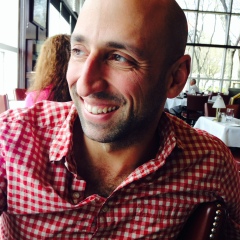 Qifa Nabki [ˈki-fə ˈneb-kē] is a blog about Lebanese politics written by Elias Muhanna, the Manning Assistant Professor of Comparative Literature at Brown University and director of the Digital Islamic Humanities Project. He earned his PhD in Near Eastern Languages & Civilizations from Harvard University in 2012, was a fellow of the American Council of Learned Societies in 2015-16, and a Whiting Foundation Public Engagement Fellow in 2017-18.
Muhanna edited and translated Shihab al-Din al-Nuwayri’s 14th-century Arabic encyclopedia, The Ultimate Ambition in the Arts of Erudition (Penguin, 2016) and is the editor of The Digital Humanities and Islamic & Middle East Studies (De Gruyter, 2016). His monograph, The World in a Book: Al-Nuwayri and the Islamic Encyclopedic Tradition was published by Princeton University Press in 2018.
In addition to his scholarship, Muhanna has written on contemporary cultural and political affairs in the Middle East for several general-interest publications, including The New York Times, The New Yorker online, and The Nation.
For media inquiries, please provide an email address and/or a telephone number via the contact page.
Recent Publications
“A New History of Arabia, Written in Stone,” NewYorker.com (May 23, 2018)
“Mashrou` Leila and the Night Club’s Political Power,” NewYorker.com (July 31, 2017)
“Is Lebanon’s New Electoral System a Path Out of Sectarianism?” NewYorker.com (June 29, 2017)
“What Gertrude Bell’s Letters Remind Us About the Founding of Iraq,” NewYorker.com (June 14, 2017)
“The Contradictions of Reza Aslan’s ‘Believer’,” NewYorker.com (April 9, 2017)
“A Lesson in Emotional Geography,” The New York Times (op-ed, Nov 19, 2016)
“Contradiction and Diversity,” The Nation (a review of Shahab Ahmed’s What is Islam?), January 11, 2016
“The Fate of a Joke in Lebanon,” The New Yorker (September 26, 2015)
“Hacking the Humanities,” The New Yorker (July 7, 2015)
“Iraq and Syria’s Poetic Borders,” The New Yorker (August 13, 2014)
“Translating ‘Frozen’ into Arabic,” The New Yorker (May 30, 2014)
“Stasis Shift,” Guernica Magazine (April 1, 2014): An interview with Jadaliyya co-founder Bassam Haddad.
“Lebanon’s War in Syria,” The New Yorker (Feb. 21, 2014): On the tortuous formation of a government.
“Letter from Lebanon: A Bookshop Burns,” The New Yorker (Jan. 16, 2014): On the burning of an antiquarian bookshop in northern Lebanon.
“Ubiquitous Liberalism: Amr Shalakany on Law and Revolution in Egypt” Jadaliyya (May 5, 2013)
“Will Civil Marriage End Lebanon’s Confessional System?” Jadaliyya (Jan 26, 2013)
“The Many Faces of Wissam al-Hassan,” NY Times (online, Oct 22, 2012): On the complicated life and legacy of one of Lebanon’s top spymasters.
“Establishing a Lebanese Senate: Bicameralism and the Third Republic,” Stanford Univ. Center for Democracy, Development, and the Rule of Law, Working Papers Series, no. 125 (August 2012). Arabic translation available here.
“Syria’s Man in Lebanon Arrested: Three Reasons to Pay Attention,” Al-Monitor (August 9, 2012).
“Syria’s Foreign Policy: A Juggling Act,” Al-Akhbar (July 17, 2012)
“Lebanon, By the Numbers,” NY Times (online, January 17, 2012): On electoral reform in Lebanon.
“Syria’s Defecting Bloggers,” NY Times (online, December 28, 2011): On the sea change in public opinion about Bashar al-Assad.
“Nasrallah’s Fighting Words,” NY Times (online, December 14, 2011): Ashura as passion and parable.
“Shelf Life,” The Nation (Sept. 5, 2011): Review of Reza Aslan’s Tablet and Pen.
“Just Another Day in Lebanon,” NY Times (online, November 23, 2011): On the Special Tribunal’s impending trial in absentia.
“No Victors in Lebanon,” Foreign Policy (Jan. 13, 2011): As the Lebanese government unravels, it’s hard to see how anyone comes out on top.
“An Interview with the Special Tribunal for Lebanon,” Foreign Policy (August 13, 2010): An interview with Dr. Fatima el Issawi, spokesperson for the U.N. Special Tribunal for Lebanon.
“The words on the street,” The National (August 13, 2010): A discussion of the sociolinguistic situation of Arabic and its alleged demise. (Online title: “The death of Arabic is greatly exaggerated”)
“The Best Defense,” Foreign Policy (August 9, 2010): An analysis of Hizbullah’s accusations against Israel in the matter of the Hariri assassination.
“A Forest of Fathers,” The Nation (July 15, 2010): A review of Michael Young’s book, The Ghosts of Martyrs Square: An Eyewitness Account of Lebanon’s Life Struggle.
“Lebanon’s Confused Secularism,” The Guardian (April 23, 2010): The confessional system has failed, but if secularism is to succeed, clarity needs to be added to the language surrounding it.
“Final Confession?“ The National (March 5, 2010): Following appeals to end Lebanon’s sectarian system of political representation, the question remains if bolder strategies are needed to secure the nation’s unity.
“Twelve Months,” The National (December 31, 2009): A review of 2009, a year of realignments in Middle East politics.
“One and Many,” The National (December 4, 2009): A review of Eugene Rogan’s book, The Arabs: A History.
“All for None,” The National (October 2, 2009): Four months after a historic election, Lebanon is still without a government. Elias Muhanna urges an end to the cult of consensus.
“Two Houses, Many Mansions,” The National (August 14, 2009): How to fix Lebanon’s Parliament? Double it. The argument for establishing a bicameral legislature in Lebanon.
“Deconstructing the Popular Vote in Lebanon’s Election,” Mideast Monitor, vol. 4, no. 1 (July-August 2009): The Lebanese opposition managed to win the popular vote handily, while still losing the election.
“Coalition of the unwilling,” Foreign Policy (June 22, 2009): Post-election wrangling has already begun in Lebanon.
“US-backed majority holds on to power in Lebanon,” World Politics Review (June 9, 2009): Surveying the results of Lebanon’s parliamentary elections.
“Bring it Aoun,” The National (June 5, 2009): Michel Aoun’s supporters revere him as a reforming hero, the only man able to repair a nation’s woes – and he agrees. A 4,000 word profile of the overlooked core of Lebanon’s opposition.
“What if Hezbollah Wins?“ Foreign Policy (May 5, 2009): Hezbollah games out the Lebanese electoral system.
“Stumbling Blocs,“ The National (May 1, 2009): As Lebanon’s closely contested elections approach, it is clear that the era of high-stakes, zero-sum politics is over.
“Our Lady of Hizbullah,” Bidoun (Winter 2008): On Julia Boutros’s revolutionary hit single, Ahibaa’i, and her muse: Hassan Nasrallah.
“Folk the Kasbah,” Transition, no. 94 (2003), pp. 132-49. On the great folk poets of Moroccan contemporary song, Nass el-Ghiwane.
**
Discussion
34 thoughts on “About”
Trackbacks/Pingbacks
-
Pingback: - March 29, 2009
-
Pingback: - June 28, 2013
Are you just gonna stand there and not respond?
And the people say…
 | Mark Gailard on Slim Gaillard and his Mysterio… |
 | Rami on Aoun and the Future |
 | Sam Berlin on Slim Gaillard and his Mysterio… |
 | Jim Hamra on Slim Gaillard and his Mysterio… |
 | nickbiddlenoe on The Saga Continues: Nicholas N… |
 Qifa Nabki
Great articles!
Posted by Siad Darwish | October 7, 2008, 2:45 amJust came across your blog, nice posts
Posted by Ali | November 3, 2008, 9:28 amgreat posts… keep them coming. Original, refreshing point of view.
Posted by im akhbar | January 4, 2009, 3:44 pmHey, I just stumbled upon your websites and I must say I’m impressed with your style. I am glad to have found a nicely unbiased view among the mire of the internet.
Posted by JRK | January 29, 2009, 12:41 amI’m a fan of your blog, lots of great posts.
Posted by Sabah | April 7, 2009, 9:31 pmwow…..i am so glad i stumbled upon your blog…its amazing
Posted by hala | April 27, 2009, 4:48 amHi there,
Great blog. I’m just putting together a piece on on the ad campaigns in the election, would appreciate if you could send me a mail to arrange a chat.
best regards,
Posted by Micky | April 28, 2009, 3:07 pmThe sheer force of your intellect and purpose were enough to ensure the success of this endeavour.
Always a big fan
Posted by EHSANI2 | May 6, 2009, 4:42 amHope you will enjoy my blog as much as I enjoyed yours, cheers. I have once tried to initiate a meeting between Lebanese bloggers but it did not happen. Sincerely, Tarek
Posted by Tarek Chemaly | May 18, 2009, 10:26 amHello: This is a great resource, thank you.
I am just wondering if you can confirm something for me. Is there any rule about whether a certain ratio of Cabinet must be current Members of Parliament?
For example, the PM who is standing in Saida – he doesn’t seem to be a currently elected M.P. Also some of the other of the 30 Ministers (e.g. Lahoud, Arslan) they do not seem to be Members of Parliament – so can the President, on the advice of Parliament, appoint 30 non-MPs to Cabinet?
Any advice, gratefully received.
Posted by Christophe | June 4, 2009, 2:37 pmthanks, Elias. really nice site!
Posted by j anthony | June 7, 2009, 5:07 pmQN,
Now i know who you are , I will write more,
Posted by norman | June 7, 2009, 6:05 pmNice Ideas, I love the Article about Saker, espacially the HeadLine “the Eagle Has Landed” Nice. and By Reading some of the Articles, i still haven’t Find Out About your Political Direction.
Posted by miss_orange | June 14, 2009, 6:56 pmelias! just came across this. bravo…
Posted by maggie | June 15, 2009, 9:32 pmLike everyone else, I too am glad I came across this blog!!! I like your style of writing 🙂 and will DEFINITELY check one of your books at Virgin next week!!!
All the best!!!
Posted by IsaLeb | July 31, 2009, 7:38 pmlol – I told you I’m dozing off!! I thought you’ve written books… anyhow, I’ll go tru the blog later!! Still though, I LOVE your writings!!!
Posted by IsaLeb | July 31, 2009, 7:41 pmwoooooow,it’s amazing
Posted by mondine tanios | August 17, 2009, 5:05 amHello 🙂
Impressive blog..I looked for a contact E-mail but I couldn’t find one so here I am 🙂
Would you be interested in a blogging initiative for the Lebanese Woman?
Email me if you’re interested 🙂
Have a great day!
Salam
Posted by nightS | October 12, 2009, 2:03 amAMAZING WEB FANTASTIC WRITING KEEP THE GOOD STUFF COMING WITH MORE SPECIFIC SUBJECTS
Posted by TOUFIC AKIKI | December 21, 2009, 9:58 pmvery good blog. i will link it in mine.
jolanda
Posted by letturearabe | May 29, 2010, 7:22 amMr. Muhanna
May I please submit comments to your blog? Thank you for considering this request.Brief C.V.
Author- “Ethics in Medicine”
Visiting Prof. Harvard Medical School – Ethics
Visiting Prof. Harvard Medical School –Neurosurgery
Adjunct faculty Boston Coll. Law School -Ethics in Health Law
Adjunct faculty Brandeis University – Bioethics
Neurosurgeon-retired
Posted by Milton Heifetz M.D. | July 26, 2010, 6:28 pmI recently became aware of a potential tragedy that we all would want to prevent – a second Lebanese war. I am not influential enough to do anything to prevent it. I hope that you may be able to put the following data in the proper hands.
Despite the existence of 11,000 UN troops in South Lebanon, Hezbollah has established bases with military equipment, weapons caches, in villages very close to schools and hospitals, all near the Israel border. This is contrary to UN resolution imposing a blockade on weapons intended for Hezbollah and banning Hezbollah from operating near the Israeli border.
If Hezbollah attacks Israel, Hezbollah would be condemning Shiite villages and villagers to tragic ends. This potential tragedy must be prevented.
Posted by Milton Heifetz M.D. | July 27, 2010, 2:53 pmI recently became aware of a potential tragedy that we all would want to prevent – a second Lebanese war. I am not influential enough to do anything to prevent it. I hope that you may be able to put the following data in the proper hands.
Mr Noe
Despite the existence of 11,000 UN troops in South Lebanon, Hezbollah has established bases with military equipment, weapons caches, in villages very close to schools and hospitals, all near the Israel border. This is contrary to UN resolution imposing a blockade on weapons intended for Hezbollah and banning Hezbollah from operating near the Israeli border.
If Hezbollah attacks Israel, Hezbollah would be condemning Shiite villages and villagers to tragic ends. This potential tragedy must be prevented.
Posted by Milton Heifetz M.D. | July 27, 2010, 2:54 pmDear Elias Muhanna,
I would be interested as to the origin of the map of the Israeli bombings you used in this post:
https://qifanabki.com/2010/07/02/israel-lebanon-war-nicholas-noe/
Could you kindly let me know where I oculd find this in hi resolution?
Many thanks,
Steffen Gassel
Beirut
Posted by Steffen Gassel | September 24, 2010, 7:29 amGreat blog!
Posted by genghisdan | December 20, 2010, 11:07 pmAwesome blog…. good job
Posted by Ishmael | January 29, 2011, 12:43 pmQN,
I sincerely believe that multiplicity of views is healthy as long as it does not generate incongruity ,organic inconsistencies and paradoxical statements that defy logic.
That is why Alex et al need to answer only one question; which I do not think that they can:
What are the basis that any entity, especially a political one, would ever reform itself into its negation? If the negation was so attractive then one would assume that it would have been declared as the goal right from the start.
Is it possible for capitalism to reform itself into communism? or a religious order into aetheism? If that is not so then why on earth would a dictatorship reform itself into its antithesis, a democracy.
One further illustration: Hezbollah can never be expected to stop being the Hizb of Allah. Once that happens then they will stop being what they set out to be. Such a transformation , if it takes place, will not be a voluntary one, it has to be forced it will be a revolution.
Posted by Ghassan Karam | May 18, 2011, 10:26 pmThis is marvelous! I love your blog. Definitely, a great source for political analyses on Lebanon and MidE current events. Excellent work 🙂
Posted by Fotoun K. | November 14, 2011, 1:56 amI just came upon your comment in the NYT and found your blog. What a gift!
Posted by Susan | December 29, 2011, 8:45 amWHAT HAPPENED TO THE QNION???!!!! Bring back the humour.
Posted by Yusef | May 29, 2012, 4:09 pmHello Elias,
I am currently completing my MA degree in Children’s Book Illustration at Cambridge School of Arts (UK) and our next project will be a dissertation about any subject of our choice.
I have chosen to write about globalism vs localism when it comes to children’s picture books since we rarely (almost never) see any children’s book with scenes from Lebanon, Beirut or any region that Lebanese kids can relate to.
Our books are either translated books or educational and yes they all are in MSA.
I hope that my next project will be a book in Lebanese Arabic. Maybe it’s too late for L. now since your article was written in 2009 .. but I’ll try to make a change for other Lebanese kids.
I absolutely loved your article and was happy to find it here.
P.S: I just stated a blog in case you would like to check it please find it below:
http://www.sashaddad.blogspot.co.uk/
Best!
Sasha.
Posted by Sasha Haddad | March 21, 2013, 6:59 amVery impressive articles Elias. Keep up the great work!
Posted by HummusForThought | June 24, 2014, 11:16 am